[00:00:07.860] - Gordon
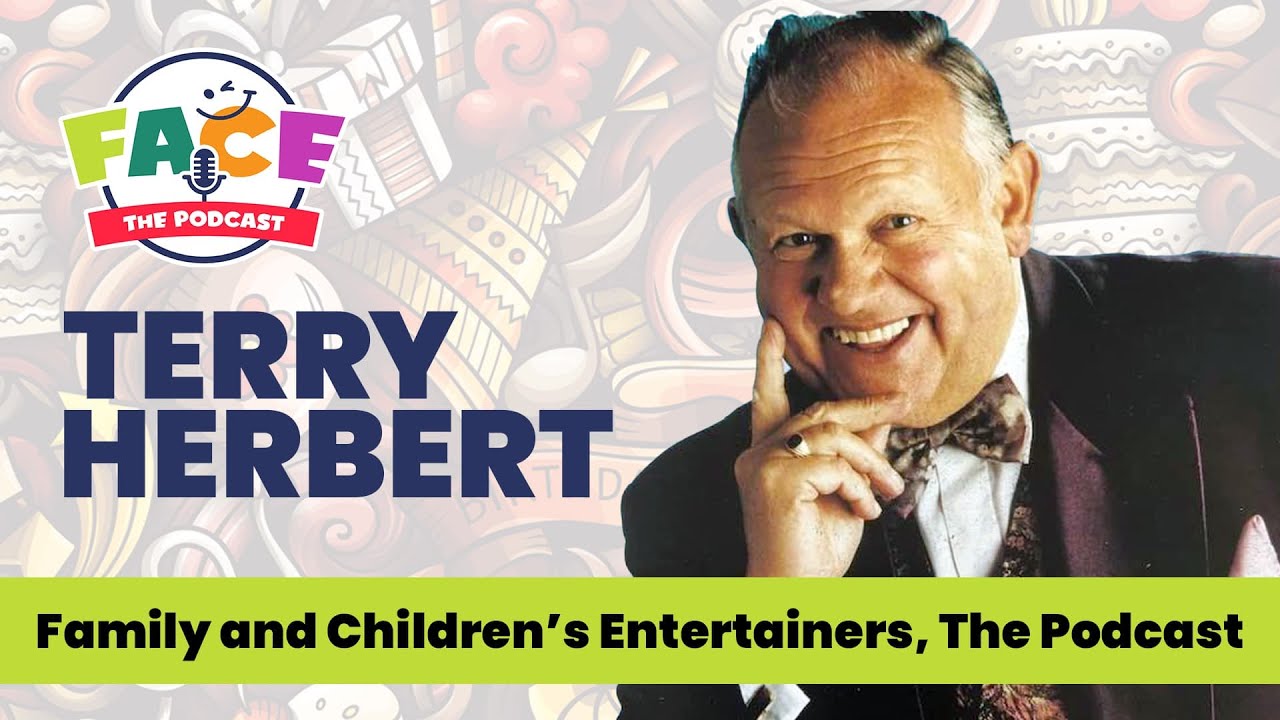
Hello. And welcome to "Face the Podcast," the family and children's entertainers' vidcast and podcast about entertainers for entertainers. Welcome to our first episode. My name is Gordon Drayson, a full-time professional children's entertainer, and I am very very pleased to have you here with me. Today to kick off this podcast, which is brand new, I have got one of the godfathers of children's entertainment. I am very pleased to say that I spoke to Terry Herbert, and he very kindly said that he would speak with me, and I would be able to interview him for the first episode of the podcast. Now, just a few little bits and pieces for you before we get into it. First of all, the podcast is videoed, so you can watch the video on YouTube, or even better, go to the website, facethepodcast.com, and you'll be able to watch the videos or listen to the podcasts. The podcast can also be found on all of your favourite platforms. Just search for Face the Podcast. So today's episode, we talked to Terry Herbert, and Terry Herbert has a great story. We talked to him about the first video he ever put out with Supreme - "Children's Magic the Herbert Way." We also talk to Terry and find out what got him into magic, and it was a little puzzle. Gaining experience as a red coat for Butlins, and also working in concert parties. We also hear about his favourite effects, including a vanishing stick of dynamite. We talk about when he turned pro, which was quite late in life, and having his own agency, and then asking his friend if he could escape from a block of ice in the middle of an ice rink. We talk about how he entertained royalty, and he also gives an awful lot of advice that all entertainers can benefit from. So let's not take up any more time and get straight into it. Just over an hour with the legend that is Terry Herbert.
[00:02:36.980] - Gordon
Well, what can we say? The Pod father of children's entertainment. You are looked at as the person who is the...
[00:02:49.190] - Terry
Inspiration is the word you're looking for.
[00:02:51.670] - Gordon
The inspiration, the father of modern children's entertaining.
[00:02:54.880] - Terry
The godfather.
[00:02:55.830] - Gordon
Yes. Would you agree with that?
[00:02:58.120] - Terry
It's very flattering, but actually, I think it all started on that side when I was known to the children's entertainers in general is when I did the first video for Supreme, which was called "Children's Magic the Herbert Way," which was a VHS video.
[00:03:14.910] - Gordon
So that was one of the first instructional videos that came out for children's entertainers.
[00:03:19.860] - Terry
It was indeed.
[00:03:20.170] - Gordon
And it became the one to go to. Whenever a new entertainer would come along, everyone would say, "Go and watch Terry Herbert's video. It's just amazing." So we'll touch on that. We'll come to that. But let's go right the way to the beginning. What first got you interested in magic, in general?
[00:03:38.270] - Terry
Well, I suppose it was when I was about 11 years old. My father had shown me originally the snapper trick, where you try and fit it on a bit of elastic, but he wouldn't tell me how it was done. And I had to work it out myself. And then following that, I got an Ernie Sewell box of magic, which guys of my age group, I think that's how they all started. It was the "Marvin's Magic" of the Day was the Ernie Sewell box of magic. He was a Royal Command performer from what I gather. But he brought out a whole series of boxes of tricks, and that really got me going. And in those days, you could buy tricks from places like Woolworth's, who sold individual tricks. And my father, he was a rep for Truman's Brewery. And on his travels, he went to Tooting Beck Market, and there was a guy there selling magic tricks, but they were like professional tricks. And then I discovered places like Hamley's and Gamages who had a magic department. Hamley's, of course, had the magic department in the basement. And also, of course, the first dealer I ever met went to Stafford Ports when they were actually New Oxford Street in those days. And that's really how I got started, by buying individual tricks until I got myself a little act.
[00:05:07.420] - Gordon
And did you originally think, I want to be a children's entertainer, or was it just close up type magic?
[00:05:14.160] - Terry
No, no, no. It was actually... It was children's entertaining didn't come into it at that stage. I was actually a member of four different concert parties, which were very popular in those days. And we used to do charity shows for old folks homes, Derby and Joan clubs, hospitals, community centres. And you used to consist of maybe a girl singer and a pianist and a guy playing the accordion and a comedian and a compere, and a spesh act. And I was the spesh act. I was 14 years old. I was still at school. But my first act as such was the coffee vase, which you put cotton wool in, and I used to produce a cup of tea, hot tea, and give it to somebody in the audience. And then the Wine & Water trick, which I bought from the Boy's Magic Service. Now, that was a club for boys, very sexist for these days, but it was called the Boy's Magic Service or the Boy Magician's Club. It was run by a guy called Jack Reece in Wales. He was a dealer as well, and he had a catalogue of tricks. And when you joined, you joined when you were, say, about again about when you were 14 years old or whatever and you used to get a magazine called "The Trixie." And he was very clever. He preprinted 24 copies of "The Trixie." It was like a tar build course of magic for children, for youngsters. And it was so good. They used to advertise in the kid's comics like "The Wizard" and "The Hot Spur." They were the comics of the day. And yeah, I joined that and you got a magic wand and you got a certificate and a badge and it was a Guinea. And if you got your name in the local paper, you got a voucher for five shillings, which you could spend in his catalogue or whatever he was selling. And the thing was that every time we did a show with the concert party, the guy who was the compere. He was a guy called Fred Pierce. He used to do a report for the local newspaper; so I was in the local paper nearly every week. And in the end, he had to drop it to half a crown, two and six - twelve and a half pence in our day. In the end, it didn't cost me anything, and I got loads of tricks from this Boy's Magic Service, which didn't cost me anything. I just spent all my vouchers on it, you know. But that was the beginning, really.
[00:08:00.160] - Gordon
I just love the fact that as a child magician, you were getting all these free tricks just by performing. So you were effectively being paid in magic tricks.
[00:08:11.250] - Terry
Exactly right. Yeah.
[00:08:13.620] - Gordon
Which is like, yeah. Every magician's dream as they start out, really, isn't it? So yes, you did lots of concert parties. You did one called "Wonders Never Cease." Was that around this sort of time?
[00:08:24.250] - Terry
Yes, that was the first one I joined.
[00:08:26.150] - Gordon
Okay.
[00:08:26.440] - Terry
And that was actually run by the guy who had this Tooting Beck market because he was also a magician. My father said that I was interested in magic and I did magic, and he invited me to his home to show him what I could do. And so he put me in the show as well. So he was a young guy. He was in his mid 20s, I suppose. That was the first society. Then we left him and we formed another one called "On Parade." Then I was in the "Norwood Odeon." I lived at West Norwood at the time, and there was one called the "Norwood Odeon's Concert Party." And it was run by the local bus driver, a guy called Sid Danze. And then I joined the "Norbury Review Company." And yeah, so it was my real beginning of show business, to be honest.
[00:09:23.060] - Gordon
So the age of 14, you're out performing, you're getting experience of how an audience works and how to work an audience.
[00:09:30.930] - Terry
Exactly right.
[00:09:31.880] - Gordon
So what was the next step for you from there?
[00:09:35.610] - Terry
Well, when I was 18, I had an ordinary job. I got a job as an office boy for a company called "The Motion Picture Association of America." And that was a great job. It really was. But when you were 18, you got called up for National Service. But unfortunately, on the medical, they found that I'd got a spot on the lung and I had a touch of tuberculosis. And so instead of going into the RAF, which I was going to sign up for, I went into a sanitorium. And that was for about five months. And so I was laid up for quite a while then. And then by the time I was 19, 20, I went back into the show business on the Concert Party side. And then when I was 21, I joined Butlins.
[00:10:26.040] - Gordon
Ah, Butlins, yes. So I was a Blue Coat for a year. I did Haven Warner.
[00:10:32.470] - Terry
That's it.
[00:10:32.940] - Gordon
It was at the time because they'd just joined forces.
[00:10:34.740] - Terry
I used to do Cabaret there.
[00:10:36.060] - Gordon
Yes, because we had lots of...
[00:10:38.480] - Terry
I was one of the guest artists at Haven.
[00:10:39.980] - Gordon
Nightly guest artists used to come by. And it's actually come full circle now because myself and my double act partner, Paul, we've been doing Haven sites as the guest artist. So it's quite funny to see it from the other side.
[00:10:55.410] - Terry
Same thing happened with me with Butlins as well.
[00:10:57.860] - Gordon
But Butlins and Blue Coats, Red Coats, they're a great grounding for learning the trade, if you like.
[00:11:05.920] - Terry
Exactly right. I started in 1956 with Butlins as a Red Coat children's entertainer, and I started at the hotels they had at Cliftonville near Margate. And it was just a summer season. My mum was definitely against it. My dad encouraged me because it was him that set it up for me. He met the, Wally Goodman, who was the assistant director of entertainments, and a guy called Harold Vintner, who was the PRO for Butlins, and he met them at the Dulwich Constitutional Club. He happened to be talking to them and he said that his son was a magician. And they said, "Well, perhaps he'd like to do a show for us." And they were going round doing a promotion for Butlins with a Red Coat show, going round different social clubs. And so they invited me to be up there to do an audition, basically. And Wally Goodman, he was my second dad. He was a lovely guy. When he introduced me on the show, he already told the audience that you will be seeing this young man at Easter time at the Butlins hotels at Cliftonville. I hadn't even done a show. So that's how it all began. And I got £7.10. £7.50 in today's money. Whereas the others were only getting five or six pound, but I was booked as an entertainer, so I was one step up. And I was 21. And then I was doing quite a few children's shows. And that's really how I started doing the children's entertainment.
[00:12:46.430] - Gordon
And do you remember much about that show? Do you remember what you did?
[00:12:51.450] - Terry
Yes, roughly. I mean, I've got photographs in my album. I've got two photograph albums. I remember doing the magic washing...
[00:13:00.010] - Gordon
Okay.
[00:13:00.380] - Terry
With the silks on the double rope.
[00:13:02.310] - Gordon
The Supreme big white one.
[00:13:02.690] - Terry
With the wand in the middle as the prop. And I remember putting a mug at each end.
[00:13:08.710] - Gordon
Yes.
[00:13:09.330] - Terry
And the other mugs got a mug at each end. That was one of my gags I did then. And I can remember doing the suck a beaker vanish. This was on a little tray. You had a beaker and you had a tube and it was a cloth in the front. And it was a bit like, there was a card one as well, very similar.
[00:13:32.210] - Gordon
Yes, A Jack Hughes thing.
[00:13:33.130] - Terry
And then it disappeared altogether. Sorry?
[00:13:35.090] - Gordon
Jack Hughes, was it that?
[00:13:38.060] - Terry
No, I think I got it second-hand. It wasn't the Jack Hughes one.
[00:13:41.180] - Gordon
Okay.
[00:13:41.340] - Terry
I don't think so. I think several dealers were selling it. I remember it was a tin one. It was a tin mug and everything. But yeah, I can remember those two particular tricks.
[00:13:51.660] - Gordon
So that's a bit like magician in trouble, isn't it? Because you're struggling to make the beaker disappear and then the cloth falls off the trunk.
[00:13:58.020] - Terry
That's right. That's probably when I was trying to form the idea of the children doing the magic and they got me out of trouble kind of thing.
[00:14:07.060] - Gordon
Okay.
[00:14:07.680] - Terry
I didn't do many sucker tricks in those days. I never used to. I used to do the odd one, but I was not a huge fan of sucker tricks, to be honest, unless it was making a sucker of myself.
[00:14:22.000] - Gordon
Okay.
[00:14:22.740] - Terry
I can remember one trick I did was the vanishing stick of dynamite, which would be hysterical today, but it was actually an old trick. It was supposed to be a firework, but it did look exactly like a stick of dynamite. And it was a touch string in the end as the fuse. That was a proper fuse. And you started off, you'd give it to the kid to hold and you light it and it's fizzy. And you put it in a tube and you say, "I'll show you another trick. You hold that." And you give him the tube to hold. And then I did a vanishing silk with a thumb tip routine. And then I said, "Oh, you'd better take the firework out now, it might have gone out." And when he takes it out, or dynamite, is the silk's in there. And I turned around and the thing's on my back and I throw it away and it explodes. So I had a blank pistol underneath the table and we used to fire that. So it was a funny routine.
[00:15:20.710] - Gordon
That's great. That would work today. I think that would be great.
[00:15:24.620] - Terry
Well, I did it actually at the Blackpool Convention a few years ago when I was doing a lecture on "Tricks you shouldn't do today."
[00:15:33.160] - Gordon
Well, definitely one not to take on an aeroplane.
[00:15:36.590] - Terry
Well, yeah. I mean, to give a kid a smoking, a stick of dynamite is not really the done thing to be honest, you know. But yeah, but I always did... If there was something on your back, it was me. Later on, years later, one of my favourite tricks was called "The Balloon Fish," was invented by Bob Austin. And Ken Brook, who I was; he was my mentor, basically. A name that is, bless him, he was one of the best dealers in the business, in my opinion. He rang me up and he said, "Here, Terry," (it was Yorkshire feller.) He said, "I've got a great trick for you." He said, "Come and listen to this." And I went over to his studio. It was when he had his own studio, called "Ken Brook's Magic Place" in Wardour Street, and he had a tape recorder and I heard 10 minutes of children laughing. And I said, I don't know what it is, but I'll have it. And it was a trick called "The Balloon Fish." And it was basically like a card in balloon was the effect. But it was a cut out of a diver and you put him in his diving bell. And the balloon fish was a flat fish with a hole in the middle, which you made a balloon out of a classic round balloon. And then you shot the balloon fish and that exploded and the diver was in the middle of it. But it was a lot of business. This is why I never did balloon modeling. I never did balloon modeling because I got all the gags you can get out of a balloon doing that routine. And as I say, it was actually created by Bob Austin. And it was great. In fact, I went through two of them because I wore one out and I managed to get another one second hand. But I think one or two guys got it, but couldn't see the strength in it. But it was one of my favourite tricks that was.
[00:17:30.960] - Gordon
Yeah, you mention Ken Brook. I never met Ken Brook, but I've read all the books and spoken to other people about him. But I just love the fact that, you never have this today, with a dealer who rings you up and says, "Come and buy this trick." Effectively. "This will be perfect for you."
[00:17:49.370] - Terry
Yeah, well, that's right. And if, he'd show you a trick and if he thought it wasn't yours, it wasn't suitable for you, he said "you don't buy that. You don't, it's not you. You don't want that." And he'd show you. Mostly his stuff was adult magic. He did very few children's tricks. I can think of just three that he did. If the guy said, "Well, do you think I'd be able to do that?" "If you don't want it, you don't have to." And he'd create the desire for the bloke. He had to have it in the end.
[00:18:21.170] - Gordon
That's great. So you mentioned just a few minutes ago about not liking sucker tricks. Now, is that because you didn't like to be the magician who got everything right, and you were suckering the children and going, "ha ha you got it wrong?" Or was there another angle you were looking for?
[00:18:42.390] - Terry
No, not really. The sucker trick, the last one I do, the one I still do actually, if I ever do a show, is called Fraidy Cat Rabbit. Are you familiar with that?
[00:18:51.920] - Gordon
I know it, yes. An American trick.
[00:18:53.070] - Terry
And I love that one. And I got a routine with it which takes the heat off the sucker side of it. And it finishes off with a big laugh. If you're familiar with the trick, you know how it finishes. But the way I work it is, because I used to have a rabbit puppet and I said, "I've got a picture of him." And I'd open up and this is his hutch. "But when he was a little baby rabbit, it was a little black rabbit. Would you like to see him?" And I open up the door and there he is, the little black rabbit. "And he said to me one day," because he could talk you know, as you'll find out later. "He said, I want to be a magician's rabbit, and I've always wanted to be a magician's rabbit. And the magician's rabbit's always white rabbits. He said, Could you turn me into a white rabbit? I said, Certainly, with the help of all the boys and girls, we'll turn you into a white rabbit." And so you do the sucker business. Then you do it again and the kids are saying, "Oh, you turned it around," and etc. Obviously, for the people who are listening, they're familiar with it. Then in the end, you take it out of the hutch. You've shown both doors, you've shown it empty, and all the rest of it. And then, of course, as you know, when you turn it around, it's his tail. And I said, "What do you want to look at his tail for? You rude lot." And the kids used to fall about with a laughter. Although you've caught them, you're finishing with a laugh. And of course, you get a bigger laugh from the adults that are there as well because they can see the other side of it. But it's a fun thing. But other sucker trick, as I say, unless it's something that you finish with when it's a suck against you, when it's on your back or whatever, that's fine.
[00:20:36.500] - Gordon
Okay. It's an interesting idea because a lot of magicians these days, they do sucker tricks and it's like, "Hey, I'm the fantastic magician. You got it wrong. Ha di ha ha."
[00:20:46.400] - Terry
Well, that's the side I don't like.
[00:20:47.820] - Gordon
No, I don't like that because you're supposed to be entertaining them, not making them feel silly.
[00:20:51.650] - Terry
I used to do "Run Rabbit, Run,"
[00:20:53.370] - Gordon
Yes.
[00:20:53.800] - Terry
You see. And that, I suppose, is in a way a sucker trick, although I never looked at it as a sucker trick, really, because they found the rabbit. If it was a private house, I'd hide the duplicate rabbit underneath a cushion or something. And then they said, "Well, where is?" "Oh, there he goes!" And all the kids are looking and I'm pointing at the cushion and the kid goes over and finds the rabbit behind the cushion.
[00:21:17.320] - Gordon
That's a nice magical moment. Yeah. That was probably the first professional prop I ever owned. It was £25 from Magical... err International.
[00:21:29.860] - Terry
Which one?
[00:21:30.360] - Gordon
International Magic.
[00:21:32.110] - Terry
It was brought out before then .... used to do it.
[00:21:34.220] - Gordon
But I'm younger than you. I saved up all my paper round money.
[00:21:41.950] - Terry
It was dear for that too.
[00:21:42.310] - Gordon
And I remember spending £25 and getting this Run Rabbit Run prop, which I still have. It's a great trick. It's a great trick.
[00:21:49.960] - Terry
I actually...The last one I got was from a guy in Holland. I can't remember the dealer now, but it was a big one, very big one. And it slowly went from one side to the other.
[00:22:03.250] - Gordon
Okay.
[00:22:03.790] - Terry
And it's actually George Cavalry has a version of it.
[00:22:07.990] - Gordon
He does. Yes.
[00:22:08.800] - Terry
Exactly the same version. But the one I had was all painted up and it was beautiful. You had a proper brick wall and everything. But I think George isn't painted up so much. You can do it yourself. But that was the method. And it was a nice size, especially if you were doing bigger shows, stage shows.
[00:22:29.390] - Gordon
So we are at Butlins and you were there for a little while, I understand?
[00:22:35.010] - Terry
Well, I started as I say, '56 and '57, I did Summer Seasons only. Then the third season, I was at the Ocean hotel at Saltdean. They found that hotels are more suitable for me and my kind of personality. But it's a wonderful training ground for anybody who wants to learn the business. You learn to sell yourself. This is a soapbox I always preach on that you got to sell yourself before you sell your magic, or sell your act. People have gotta to like you. It's like you're going back to the sucker trick idea again. People have got to like you. Whether it's adults, children or whatever, you've got to come over as Mr. Nice Guy. And if you come over as a bit aggressive or big headed, you're on a sticky wicket to start with. As a Red Coat, one of the main jobs you did was to talk to people. You were the host of the site, whether it was a camp or a hotel or whatever, you were the host. I was very shy when I first started as a Red Coat, but you soon forgot all about that because you had to talk to people. And that's what it's all about. And then on the third season, they gave me the job summer and winter because the hotels were open all the winter round as well. And eventually I did another two seasons of Red Coat, then I was promoted as a compere and assistant entertainments manager. And I was finally entertainments manager. So I was with them nine years altogether. I finished in 1965.
[00:24:15.260] - Gordon
So great training then. Children's entertainer, compere, and then manager. So you got to learn how to entertain all different types of audience.
[00:24:26.900] - Terry
And handle people.
[00:24:27.820] - Gordon
Handle people, be able to fill in as a compere. Just great grounding for entertainers in general.
[00:24:34.920] - Terry
When I left, it's when I got married, actually. I married my secretary, who I'd met at Butlin's at the Ocean hotel at Saltdean, Avril. Bless her heart. And we've been married 57 years now.
[00:24:50.640] - Gordon
Wow.
[00:24:52.390] - Terry
And yeah. So unfortunately, the year before, I'd lost both my parents, from my home in West Norwood. Both my mother died in the January, my father died of a broken heart basically in the November. And my sister was living alone at home. She was eight years younger than me and I was concerned about her. So I suggested that we should get married and we could go and live at West Norwood at the parents' house. However, I didn't have a job because the only thing I knew was the entertainment business. And I'm a great believer in fate because two weeks earlier I was reading The Stage newspaper and there was a half page advert for an assistant manager at the ice rink at Streatham, which at that time was called the Silver Blades Ice Rink. And so I applied for it and got the job. And it started me all over again. I knew nothing about skating at all, but I did know about entertainments and promotion. And so I was the promotions manager, entertainments manager. And in those days, they used to have a top 60s pop group because it was 1965 that I joined them. And we used to have people like New Faces, Small Faces, I beg your pardon, Small Faces, The Kinks, all the big names. The only ones we couldn't afford were The Stones and The Beatles. But all the others, the 60s, well known 60s groups we used to have once a month for the teenagers.
[00:26:28.280] - Gordon
And was it sort of a stage on the ice rink and everyone sat around?
[00:26:32.020] - Terry
Yeah, they had a stage there. The ice rink, the skating, the ice was in front. Stage was in the back because there was music played while people skated.
[00:26:40.590] - Gordon
Right. Okay.
[00:26:41.280] - Terry
Used to have an organist play. And I did a bit of DJing as well. First time I ever did a bit of DJing. I remember introducing a record by Nancy Sinatra called "These Boots Are Made for Walking." And I predicted it, because we used to get the promo records before they went out. And I predicted it would be the top of the hit parade. And I was right. Within two weeks it was top of the hit parade.
[00:27:06.490] - Gordon
And you didn't even need a knife with an envelope to predict it. You knew.
[00:27:11.630] - Terry
Should have thought of that. I enjoyed it. It was good. I was the first one to put... You'll be interested in this. My dearest friend in those days was a guy called Howard Peters.
[00:27:30.380] - Gordon
Howard Peters.
[00:27:31.500] - Terry
And his speciality was escapology. And I suggested to my governor, "how about somebody escaping from a block of ice in the middle of an ice rink?" He said, "Oh, mister". He said, "That would be a great idea. Do you know anybody who could do it?" I said, "Leave it with me." So I had a word with Howard. I said, "Do you think you can escape from a block of ice in the middle of an ice rink?" And he always say yes and worry about it afterwards. And we did it. We got it in the evening news. We had national press on it. And it was a great success.
[00:28:07.630] - Gordon
So it's funny you should mention Howard Peters because at the age of eight years old, for my birthday, my dad asked a magician to come and do a children's party for me. And it was at home. And I remember it really well. And I found out in later years that it was actually Howard Peters. And that was the first children's entertainer I'd actually ever seen. So to hear you talk about him now is just...
[00:28:39.330] - Terry
He's my dearest friend. He was my best man at my wedding, and I was his best man at his. Unfortunately, very sadly, he passed away in 1999. But he used to do a lot of the escapes and publicity stunts for the British Ring and the IBM in the British ring.
[00:28:58.720] - Gordon
That's right. I remember reading about those.
[00:29:00.440] - Terry
That's right. He used to do a lot of those. That was the beginning of the convention. And in the latter years, I used to do the spiel for him as well. I forget how young you are. You probably don't remember these things.
[00:29:11.700] - Gordon
Well, I didn't know he was an escapologist. I knew him as a children's entertainer. And it wasn't only later that I found out.
[00:29:16.990] - Terry
He always did children's entertaining. In fact, in later years, while we're talking about children's entertaining, I bought the agency that used to book me. When I turned full-time, children's entertainer in 1976. December 1976 is when I turned full-time professional. Up until then, I was just doing it semi. And I bought the agency that used to book him. It was called Casey Entertainment, and it was run by two children's entertainers called Billy Burns and Irene. And he was retiring. So when I went full-time, I bought his agency that used to book me. And then, of course, I used to book Howard through the agency, plus a lot of other children's entertainers as well.
[00:30:02.480] - Gordon
So that's great, though, because you ended up being an agent as well, then?
[00:30:07.320] - Terry
Yeah, I bought it as a cushion. When I decided to turn pro, I had a word to dear friends of mine, Ali Bongo and Alan Shaxon at the Magic Circle. And I said, "I'm thinking of this" because at that time I was a salesman for toys. I used to work for Mattel and Meccano. I started with Meccano. I did three years with Meccano when I left the ice rink. Then I did seven years with Mattel, which was the big American toy company. Being an American company and a salesman, I was middle management. I was there as a sales manager for them, and a lot of pressure. I was getting busier and busier on the entertaining side. With the blessing of my dear wife, we had a little bit of money towards it. I asked Alan Shaxon and Ali Bongo, what do you think? They said, "Well, make sure you've got enough money without having another show to be your backing for it. Capital." And we did. So that's when we made the decision and I turned pro. It was a hell of a decision to give up a 9 to 5 job to turn working for yourself. But I had every confidence. And the following year, which was '77, was the Queen's Jubilee and everything fell into place and I got the agency. And not only did I book myself, but I did seven shows on that Jubilee Day, but I also had about a dozen kids entertainers out making a commission for me as well. So that's how it all started being full-time. And being a salesman as well.
[00:31:48.780] - Gordon
So you had lots of jobs before you actually went professional. And do you think maybe that you could have gone professional earlier? Or do you think it was just the right time at that point?
[00:32:01.160] - Terry
The timing was just right.
[00:32:02.590] - Gordon
Just right then?
[00:32:03.370] - Terry
Yeah. I got the experience behind me. I was 40, 41, something like that. And everybody, my local neighbours, thought I was stark raving mad. I said, "I'm giving up selling for the security of show business."
[00:32:20.440] - Gordon
Yeah, I could see why your neighbours were concerned. So that's quite late in life, really, to go full-time professional.
[00:32:28.470] - Terry
Yes, it was, probably. But I got the experience behind me. I'd been working as a magician since I was 14 years old. But when you're full-time, it opens a lot of other doors as well that you couldn't do as a semi-pro.
[00:32:45.960] - Gordon
Yeah.
[00:32:46.310] - Terry
I did film extra work, I did modelling. Well, I always did... We mentioned earlier the Punch & Judy. I did Punch & Judy since I was 14 years old. So I used to do a lot more with that as well. There were so many different things you could do. Advising. And of course, I did quite a few TVs in the end. Then I developed an act that I did abroad called "The Great Fiasco." So I worked abroad as well, which of course, I would never have been able to have done as a semi-pro.
[00:33:25.330] - Gordon
So I love the story of The Great Fiasco because The Great Fiasco is how I discovered you.
[00:33:30.690] - Terry
Oh really?
[00:33:31.720] - Gordon
The first time I knew of Terry Herbert was The Great Fiasco, 1988, Paul Daniels' Magic Show.
[00:33:38.060] - Terry
No, it wasn't the Paul Daniels Show. It was "The Best of Magic."
[00:33:40.360] - Gordon
Ah, but I saw you on...
[00:33:41.560] - Terry
You saw me on the Paul Daniels, but I was doing the stand up camera.
[00:33:44.490] - Gordon
You're right. Yes, it wasn't The Great Fiasco. But that's when I first heard of Terry Herbert with your... You were doing the sausage.
[00:33:50.590] - Terry
That's right. That was my signature trick.
[00:33:52.350] - Gordon
That's right. Yes. So I saw you then. That was the first time I knew of you. And I was a...
[00:33:59.090] - Terry
Yeah, The Best of Magic came a year after that.
[00:34:01.850] - Gordon
I was a teenager sitting at home with my parents watching the Paul Daniels show. And suddenly you came on and it was like, "this guy is amazing!" And when I first joined the Magic Circle, which was a few years later, you were there. And it took me maybe a year or two to actually come up and say hello because I was a bit in awe of this man that I saw on Paul Daniel's show, actually being there. And as soon as I said hello, you were the most friendliest person ever. But it took me a while to get the confidence to come and say hello to you.
[00:34:37.910] - Terry
Oh, bless.
[00:34:39.000] - Gordon
We'll be right back with our interview in just a few minutes. But first, a word from our sponsor, which today is me. So as well as being a full-time entertainer, I also run a company called Drayson Design. And one of the products that we produce is called "Drayson Design Reviews." This is a system that is designed to make sure you get reviews and testimonials from all of your shows, and make sure that they are available in social media as well as on your website. It integrates with all the big social medias, including Facebook and Google, along with lots of other services as well. You have one link that you send your customers. They can leave their testimonials on your social media, and after they've left them, they'll be pulled back into your website so you can display those anywhere you want to put them. Now, what's really clever is it's smart. So if people leave you a four or five star review, then that's great. You ask them to leave a testimonial on social media and it gets pulled into your website. If, however, they leave a three star or less review, well, you don't really want that on social media. So what it'll do is it will send them a form instead saying, "I'm so sorry, we didn't meet up to your expectations. Please tell us why." And that comes straight to you and not to anybody else. So you can fix it, and it prevents a bad social media review. Once it's in the system, you can then show them on your website. You can tag each review with different tags so that they can show in different places. That way, if you do Punch & Judy, you can have all of your Punch & Judy reviews shown on your Punch & Judy page. And if you do children's parties, you can have all of those reviews on your children's parties page. So they've got the right reviews on the right pages. And even cleverer is it can have a wall of love. And this will show all of your reviews, which work a little bit like Facebook. So when you get to the bottom of the page, it will then load more and it will keep scrolling until it runs out. That way you can show all your reviews on a very, very fast website. And all it takes is a few lines of code added to your website for this to work. Now, you can find out about this by going to draysondesign.com. The link is on the screen, or if you're listening to the podcast, then look for the show notes on our website, facethepodcast.com. Right. Enough of me. Let's get back to our interview.
[00:37:27.470] - Gordon
Going back a little bit.
[00:37:30.260] - Terry
Yeah.
[00:37:31.290] - Gordon
The Supreme Magic video.
[00:37:34.060] - Terry
Yes.
[00:37:34.890] - Gordon
How did this come about? And when was this?
[00:37:37.870] - Terry
It was Ian Adair who suggested it. He had this idea about doing a series of VHS videos. And there was only myself and a guy called Marcus. I don't think he's with us anymore now. But anyway, and I said, "Well, I'll do it on one condition. I'm not doing it as a sales promotion for Supreme. I'm not going to do a load of Supreme tricks. I'll do my act as I do it. Act as known." And he was quite, "Yes, that's fine. That's what we want." And it was done by a professional video company in Barnstaple. And I stayed with him at his house. And we did the show. We had a bunch of kids from a local school. And I did this act that I did commercially at that time. And at that time, I also used to use a live rabbit as well. Later years I didn't, but in those days I did. And I had a great prop where a puppet rabbit came out the roof and popped down and then you produce the live rabbit. And that was bought by a guy in America who really fell in love with it. He paid me a lot of money for it. I won't go into that. But yeah, that's how it all started.
[00:38:59.300] - Gordon
So had Ian seen you at the IBM Conventions and so forth? Is that how he made the connection?
[00:39:04.290] - Terry
Well, he knew me as a children's entertainer at the time. When was that came out? 1980... Now, when did we do that? I've got 16 books of press cuttings down there, and the dates there. But it was in the early 80s, I think. It was the first one to come out. And by then, I'd been doing a lot of children's shows and I'd done the children's showtime at the IBM convention. I was quite well known as a children's entertainer by that time. But when that was published, it was their best seller. And then eventually it was made into a DVD when it was sold to L&L Publishing in America, and it became a best seller again. And that's really what got me known internationally. That with the Fiasco Act got me known. So I have a lot to thank dear Ian for.
[00:39:59.140] - Gordon
So the video came out and it was the only video for children's entertainers for quite a long time, in fact.
[00:40:05.510] - Terry
This is the interesting thing because people say, "Well, who influenced you as a children's entertainer?" Nobody did. Because you never saw another children's entertainer perform.
[00:40:16.360] - Gordon
That's right.
[00:40:16.900] - Terry
Unless it was a public show. And there were very few of those. There was the park shows. We used to do the park shows.
[00:40:24.350] - Gordon
Yes.
[00:40:24.670] - Terry
But there was very... you know 90% of our work was private house parties. So you never saw a Children's Entertainer work. There were no lecturers doing children's lectures. There were very few books. My children's book, the first one I ever got was "Open Sesame," which if you read it now, there was so much anti-PC stuff in there. You couldn't do half of it. But that was the children's entertainer's book at that time by Eric Lewis and I can't remember the other guy.
[00:40:59.950] - Gordon
I can't remember.
[00:41:00.640] - Terry
Wilfred Tyler.
[00:41:01.160] - Gordon
Of course, it was.
[00:41:01.810] - Terry
Wilfred Tyler. Yeah. And of course, Wilfred Tyler used to book me for the children shows at the IBM convention as well. So Ian knew me as a kid's entertainer. And yeah, as I said, it was very successful. And of course, a few years later, when Practical Magic came about after Supreme had finished, and Jeremy Le Poidevin, he said to me, "Would you do another one?" And we did "Children's Magic for Under Fives," because one of my favourite audiences were preschool, play groups, and I had an entirely different act for them, except for one trick that I have always been doing. What was it?
[00:41:49.190] - Gordon
Oh, you're putting me on the spot.
[00:41:51.860] - Terry
I'll put you out of your misery. The Silver Sceptre.
[00:41:54.910] - Gordon
Right. I was going to say... I'd have got there.
[00:41:57.570] - Terry
The Silver Sceptre.
[00:41:59.520] - Gordon
It's in every show that I do.
[00:42:00.400] - Terry
Which I did in every show.
[00:42:01.300] - Gordon
Yeah, me too. Yeah, it's a great trick. I do it because of you, though.
[00:42:06.970] - Terry
Oh I know.
[00:42:07.600] - Gordon
Yeah, I do it.
[00:42:08.320] - Terry
A lot of kids' entertainers say this because they had it in their drawer and never used it. The original one was by George Blake.
[00:42:15.560] - Gordon
Yes.
[00:42:16.180] - Terry
And it was sold by a Magical Mart, Oscar Oswald. That was the original one. But I worked on it and worked on it, and you get so much business out of it. But I think you've got to be of a certain personality to do it successfully. But yeah, that's the one trick I always kept in both children's shows. I used to have two basic children's shows. I had the one for under fives and the one for fives up to, say, nine. After that, it's semi-adult, really. More close up magic, if you like. But they were the two. And I did the same program all the time, even when I had repeat bookings, because people used to say, "How can you do the same show?" You used to get the same bunch of kids. They used to book me year after year, the same audience. I said, "Well, there's always a difference, and there's a different age as well. And so there's always extra children there. I used to do the same schools for years, doing the same act, but the audience used to change. And even the ones that had seen it before, it was a year before, so they don't remember it. And one of the things that I always say that children love repetition. They love watching the same cartoon over and over again. So it was never a problem. The trouble is with a lot of kids, well, not necessarily kids' entertainers, adult entertainers. They keep changing their act all the time, so they never perfect it. So I've been doing the same act for years. If you saw what I did a few months ago, it was the same that was on that first DVD or the first VHS I did.
[00:44:06.040] - Gordon
But you've honed it. You've got it to a position where you know absolutely everything about every part of the show.
[00:44:11.730] - Terry
Because of the Covid, I hadn't done a children's show for two years, and I had to get my video out to look at it to remind me what I did.
[00:44:21.300] - Gordon
You weren't the only one.
[00:44:22.420] - Terry
I'd forgotten all the gags.
[00:44:24.420] - Gordon
It's funny because I was doing shows just after Covid. Now, it's the same. I don't change my show a lot, mainly because when I go and do a show for people who've seen me before, if I don't do their favourite trick, they get really upset.
[00:44:41.710] - Terry
Exactly.
[00:44:42.350] - Gordon
And so I try to find out if there's anything in particular they want to see to make sure I put it in. But yeah, it was about four or five months into doing shows again that I suddenly went, "Oh, that's a gag I'd forgotten all about."
[00:44:58.370] - Terry
Can I tell you a little story? In the earlier days, I did have a number two show. This is for the older kids. I had a number two show. And I had done this little girl's party before. And one of my opening tricks that I've done for many, many years was George Kamara's "Diminishing Gloves." And I turn up at this house and the little girl's waiting for me swinging on the garden gate as I arrived. "Hello, Uncle Terry." I was known as Uncle Terry in those days. "Are you going to do the trick where the gloves get smaller and smaller?" I said, No, not today. I'm going to do something new for you. "Awwww, I want the glove trick." And that's exactly what you were saying. Children love to see things that they've seen before.
[00:45:43.590] - Gordon
They look forward to seeing it, and it's their favourite bit. I do the drawing board, Axtel drawing board.
[00:45:50.650] - Terry
I used to do that.
[00:45:51.340] - Gordon
And if I don't put that in the show, I get people coming up to me going, "Why didn't you do it?" And I have to make something up. I go, "Well, Charlie wasn't feeling well." You know, whatever.
[00:46:02.090] - Terry
But if I do change a trick, I would change it to a trick which is similar to the one I've taken out. For instance, I would take Run Rabbit, Run out and put in Fraidy Cat Rabbit. So it's a similar trick. It's a similar like little sucker trick. But same thing with the balloon fish. I mentioned the balloon fish, not on this one, but earlier, I forgot. But it involved a balloon. But the only thing I used to use with a balloon was a penetration balloon in the tubes. I forget what it's called now. But I never used to do balloon modelling because I used to get all the gags and the laughter out of blowing up a balloon, which is where the entertainment comes in in balloon modelling. Making a balloon model, to me, is not entertainment. You're just making a free balloon for a little child. You see, the entertainment comes with all the gags and the bits of business in just blowing up the balloon. It makes a rude noise. He flies away. Makes all sorts, so many gags with it. But I used to do all those gags with the trick I used to do called the balloon fish, or as I say, with the penetrating one.
[00:47:14.720] - Gordon
And they're the bits I forgot when we came back out of Covid. I ended up having a show that was like five minutes shorter than it would normally be. And I was thinking, what's going on? But as you do it again and again, it all comes back to you and you remember. So I now record all my shows on audio. And I was listening back to some of the earlier ones and going, "oh, yes, that's the gag that goes there."
[00:47:37.920] - Terry
I find myself laughing at my own gags. You know, ridiculous.
[00:47:43.580] - Gordon
So let's talk about maybe nightmare shows, something that... Did you have any shows that went really badly that you came away going, "That's it, I'm giving up entertainment?"
[00:47:57.020] - Terry
Otherwise, I have.
[00:47:58.690] - Gordon
Okay.
[00:47:59.340] - Terry
But on the children's side, no. One of the largest audiences I ever had was over a 1,000 kids in the marquee for the BBC at Motspur Park. I remember doing that. But it wasn't a nightmare. It was quite enjoyable, actually. But only on the adult side, I can recount one of those.
[00:48:22.880] - Gordon
A lot of children's entertainers do actually use adult tricks or material.
[00:48:27.770] - Terry
I've always been both.
[00:48:28.650] - Gordon
But they do them in a way that children will understand and enjoy.
[00:48:31.870] - Terry
Oh, I see what you're saying. I'm what they call an all round entertainer. I'm not so all round now, but I used to be. But when I started magic, I did the magic; I did the children's shows; I did Punch & Judy; I did ventriloquism; I did close up magic; I did the stand up cabaret act, I did, I said, close up. I did... What's the other thing I used to do? But anyway, to make a living out of it as a full-time professional, you had to be versatile, in my opinion. I've never made a lot of money out of the game, but I made a good living. And so the nightmare show was when I was doing a... It was for a Welsh mining club down near Canterbury. I'm trying to think of the name of it, but it was, they owned the mines down there, coal mines. And it was at their working men's club. I turn up at the job and the entertainment set is on the door. "The agent never told me what you do you do then? What is your act? What do you do?" I said, "I'm a magician." "Oh, no," he said, "not a magician." He said, "They hate magicians. No, you sing a couple of numbers, you'll be all right." I said, "Well, I'm not a singer." I said, "Mind you, I do comedy as well." "Oh, not comedy. Every comedian dies in our club. Magic, they hate. No, you sing a couple of numbers, you'll be all right." So I go into the dressing room and there's the keyboard and drums. "Hello, mate." He said, "What's your act?" I said, "Oh, I'm a comedy magician." "Oh, no," he said, "no, no, no, no, no, no. Sing a couple of numbers and we'll busk it." And they were correct. I died on my feet.
[00:50:29.530] - Gordon
Wow. How funny, though.
[00:50:32.630] - Terry
But yeah, that was a nightmare show. But very funny to talk about it afterwards.
[00:50:40.050] - Gordon
Dine out on it. Yeah. So let's go to the other side of that, then. Any shows that went really, really well, you were particularly pleased with?
[00:50:50.220] - Terry
A memorable shows.
[00:50:51.210] - Gordon
Yeah.
[00:50:51.420] - Gordon
My most memorable show was for royalty. It was for Prince Rainier in Monte Carlo. I was booked by this. It was a magic show. It was at the Princess Grace Theatre. My dear wife came with me, Avril came with me. I'm trying to think of the guy who booked me for it. He'd seen me at a convention and he was a magician himself, and he booked me for this. I was doing the Fiasco act. I was the only act I'd never heard of. The compere was Young Mud. There was Jeff McBride. There was Albert Oseeta, who was doing his Chinese act. There was the guy who did the violin act.
[00:51:52.110] - Gordon
Oh, Norm Nielsen.
[00:51:53.310] - Terry
Norm Nielsen. I mean, what a bill to be on.
[00:51:55.970] - Gordon
Yeah. Amazing.
[00:51:57.280] - Terry
As I say, I'm the only one. But I was doing the Fia. And it went very well. Afterwards, we were invited to a banquet at the fantastic hotel there. All royalty were there. There was Prince Rainier, Princess Stephanie, Prince Albert, Princess Caroline. All the royal family on the top table. Patrick Hudequin, who was the manager of the theatre, he said, "His Royal Highness would like you to go and show him some close up magic." And luckily enough, Ali Bongo, who had done it the year before, warned me to make sure I took some close up magic. And at that time, I used to do the ring on key case, ring fly. And I used to do a card in wallet routine. And I had to go to Prince Rainier to do this. And I remember doing the card in wallet and I needed the card to be signed. And I thought, "Would that be etiquette for him to sign the card?"
[00:53:09.150] - Gordon
Yeah.
[00:53:09.480] - Terry
And he had a lady partner with him. I said, "Would you ask your partner to kindly sign?" So I got... I've always regretted it afterwards. But I think I did the right thing. But you have to think on your feet on these things. And afterwards, Patrick Hudequin said to me, "What did you show His Royal Highness? He was very impressed that a comedy magician could do such good magic." I said "Oh, thank you very much."
[00:53:37.710] - Gordon
That's funny.
[00:53:38.820] - Terry
Yeah. So that was probably one of the, another great compliment I was paid.
[00:53:43.110] - Gordon
Backhanded compliment, really.
[00:53:45.070] - Terry
Yeah, well, that's right.
[00:53:46.630] - Gordon
The comedy magician being lower down. With Punch & Judy, you are hidden away from the audience because you've got your hands in the puppets and you're in a booth. So you haven't got the eye contact with the children. Did you find that more difficult to entertain?
[00:54:05.380] - Terry
No. You see, before I used to do a Punch & Judy show, was normally at a fete or something like that, I always did a little magic show at the beginning. Something like the Silver Sceptre.
[00:54:15.180] - Gordon
So a bit of a warm up.
[00:54:16.270] - Terry
A warm up show. Only about 10 minutes, but just to warm them up because the Punch show would only last about 15 to 20 minutes. But by then I managed to get the audience and they're with it. And the clown, who's the first character that comes up, is actually me.
[00:54:34.530] - Gordon
Right.
[00:54:35.640] - Terry
So I do a bit of a voice to it because I can do many voices as well as many expressions. But the clown, "Hello, boys and girls, here we are again. Ahh who wants to see, Mr. Punch?" And it's a different voice, but they know that it's me. And so my personality is coming out on the clown. And the clown all comes out best in the end. He doesn't get hit. He doesn't get hurt or anything. He plays all the tricks onto the Punch himself. I don't do a show which is Punch being violent to everybody. It's still a Punch & Judy show. He still chases Judy, but he doesn't actually literally hit her. The baby gets thrown downstairs, but you don't actually see it get hit or hurt because it's always the layman's point of view: "oh, Punch is violent." It's not. It depends on the performer and how it is presented. It's exactly the same as a magic show, really. It depends on the performer. The worst sin you can commit as a children's entertainer, as any performer, is to bore your audience. And I've seen kids' entertainers do exactly that. And they wonder why the kids get obstreperous and they get a bit loud and noisy and start getting disruptive; because they're bored. If you've got the children in your hand right from the start, and I do five minutes before I've done a trick to warm them up and get them to know me and get them laughing. They learn the magic words. You've got to get them to know you. And as I said, again to like you, to love you if you like. I know that sounds bad today, but this is one of the upsetting things I find about children's entertainment today, that we live in a different world. You've got to be so careful in what you do and what you say. And some things you just cannot do as a children's entertainer, which you could in those days. It was never looked at in a bad way. You understand what I'm saying?
[00:56:59.910] - Gordon
Yeah, I do.
[00:57:00.390] - Terry
And I'm sure your audience does as well. I saw the best years. I have to be honest. I was performing from 1970s to the 2000s, and then it started changing. And I'm rather pleased that I'm... You know I'll do the odd show. I've kept a nucleus of a show by, but I'm basically retired now, mainly through my mobility, lack of. But I miss it so much because I loved and always loved entertaining children.
[00:57:38.960] - Gordon
So what do you love about it? Do you love the...
[00:57:41.570] - Terry
The laughter, the joy that you bring. You know, even after you've done the show and you're packing up, it's still ringing in your ears that you've brought a lot of happiness. Adults laughing as well because I also involve the adults. What grown ups there are there, I can bring them into it as well. So yeah, that's what it's all about, really.
[00:58:09.140] - Gordon
So something you mentioned, which is something I've always known you for is your voices and your facial expressions. Is this something that you developed or was it right from the get go? Did you start out with all these fantastic...
[00:58:25.350] - Terry
It just came naturally.
[00:58:26.140] - Gordon
It just came naturally. It's just you.
[00:58:27.950] - Terry
I am a frustrated actor. True. I've always wanted to be an actor.
[00:58:33.420] - Gordon
Okay.
[00:58:33.810] - Terry
When I watch acting on television, excuse me, I admire them so much, especially when they pan in and the person's face is selling you what they're thinking just by the expression on their faces. I admire that so much. So yeah, that's really what it's all about. Because you are an actor. As a performer, you are an actor. I have a different persona for adults than I have for children. Completely different. Yeah, that's what it's all about, really. And the expression, people often talk about "Oh the expression." And again, these are things that make children laugh. It's no good telling jokes because they don't... Unless they're very rude, they don't understand them. And I'm dead against lavatorial humour. That's one of the things. And I've heard that so many times with these modern day children's entertainer using words like bum and fart. You don't need to. You go down in the adult's estimation if you start using that kind humour.
[00:59:37.680] - Gordon
I think you limit your market as well because you're not going to get booked for some shows if they see you doing things like that.
[00:59:44.670] - Terry
Children love funny voices. They love funny faces. You do a double take and look surprised. They love that because they can see it. It's visual. But there's three types of comedy I've always said. There's visual comedy and situation comedy and audio comedy, if you like, where they're the same with noises, voices. But situation comedy where you create a comedic situation with the trick, whatever you're doing.
[01:00:21.750] - Gordon
I think that's probably, for me, the funniest and the longest lasting. I think a situation comedy from 30 years ago is still funny today.
[01:00:32.320] - Terry
Oh yeah.
[01:00:32.800] - Gordon
Whereas if you've got particular jokes or something, they can date very quickly.
[01:00:38.250] - Terry
Of course.
[01:00:38.700] - Gordon
I think situation comedy is one of the things I like to do when I'm in performance mode because it's funny to watch. And you can, as you say, do expressions and funny voices. Yeah.
[01:00:53.540] - Terry
Yeah. Well, it's on that first video, "Children's Magic the Herbert Way." And I had to remind myself of it, is I do a mismade flag routine, and I get so many laughs out of it, stuff that I'd forgotten. When I get the child following me. I'm looking for my wand and I've stage whispered him, "Follow me." And the kid follows you around and you don't see him and, "Oh, I made him disappear. Oh, I'm sorry, mummy. I made your little boy disappear. I'm ever so sorry." But he's following me. And then, of course, he frightens you when you eventually see him. But I'd forgotten that gag. When he sticks the wand up your nose and all the... There's so many bits and pieces that you can throw into a basic routine, which gets the laughs, the situation comedy out of the children.
[01:01:47.040] - Gordon
So just talking about the bits of business, there is a fine line as the ratio between doing magic and doing just bits of business, because there's always been that discussion between children's entertainers of, "yes, I only do two tricks in my show."
[01:02:05.630] - Terry
I only do what?
[01:02:06.650] - Gordon
Two tricks in my show, and the rest is all business. And to a point, I understand why they're saying that. But for me, I'm a magician, and the bits of business are part of the routine.
[01:02:19.340] - Terry
That's what makes it entertaining.
[01:02:21.220] - Gordon
Yes, I agree. So do you have more magic than business in your show, or is it?
[01:02:26.850] - Terry
No, it's all moulded together. It's all moulded together. I mean, there might be a routine that doesn't need actually any business as we call it.
[01:02:37.540] - Gordon
It's just the magic.
[01:02:39.460] - Terry
But the comedy is there. I do a silk routine. Again, I think you'll find it on that video where it starts off with a vanishing silk and then it's a colour changing silk and I bring in a Fantasio vanishing wand in it as well. But it makes a whole routine. It's out of a simple vanishing a silk to a, I've got three different tricks all in the one routine, and they all meld into each other. It's nothing I've learned. It's something that has come to me as I've been working. I thought, "Oh, it'd be funny if I did that." And it's almost a sucker routine as well because I don't know. I try to make a silk vanish, but it's changing colour instead. I don't realise that. And the kids are telling me, "Oh, it's red." "No, it's I'm making it disappear. I'm making it invisible." "No, no!" And you get that. And through doing many shows, a lot of gags come out through actually doing a show, and you get a laugh when you didn't expect it.
[01:03:46.872] - Gordon
Yeah.
[01:03:46.890] - Terry
I mean, one trick that has just been mentioned today was with a die box routine with a clock. And there was one gag in that that came accidentally when I shut the door, the other one flew open and the kids laughed. So I kept it in, didn't I. Things happen like that when you do one gag and it leads into another, which you don't expect.
[01:04:13.420] - Gordon
Well you get to a point in your performing career when you know which tricks will work for you, and which ones won't work for you. But do you find that you get a new trick, maybe back in the day?
[01:04:26.400] - Terry
It would be, I haven't bought a new trick in years.
[01:04:30.030] - Gordon
Well yeah.
[01:04:30.030] - Terry
I'm selling them.
[01:04:31.490] - Gordon
When your show doesn't change, you don't need to. Just replacements, I guess.
[01:04:35.440] - Terry
Yeah, they are actually. I have about four silver sceptors.
[01:04:39.840] - Gordon
Yes. But do you find that you look at the routine and then go, "Right, what can I do with this?" And make it a Terry Herbert routine?
[01:04:50.750] - Terry
Yeah. Well, this was an argument I used to have with Edwin.
[01:04:54.020] - Gordon
Okay.
[01:04:54.580] - Terry
He said, "What's wrong with my routine?" So I said, "Edwin, there's nothing wrong with your routines. They're very good. But I want to do my routine." Because I buy the trick, I look at the method. "Right. Okay. I've learnt how to do it. Now, what's the routine he gives with it? Yeah, that's funny. That doesn't really suit me. Maybe that would work." And I'll analyse it down and then I do my own routine. But until you've done it live, you don't know whether it's going to work or not. So you have to try it out.
[01:05:28.540] - Gordon
Yeah, and tweak it.
[01:05:29.760] - Terry
Again, when you do it with your first audience, you know which line can come in and which line can go out, and which little bit of business can go in and out. And that's how it forms itself into a routine. That's why I'm still doing the same show that I did 30 years ago.
[01:05:48.790] - Gordon
So let's finish with just a couple of questions.
[01:05:51.450] - Terry
Right.
[01:05:52.150] - Gordon
If you could talk to your 14 year old self who was just starting out on your magic journey, is there anything that you've learned now that you would tell him at this point?
[01:06:06.750] - Terry
Only to get experience. I know it sounds corny, but that's what makes you, experience. I've been doing it as I say, 40, 50, 60 years. People say that I'm good. And I don't mean that in a conceited way, but it's only because I've been doing it for so many years. You throw what's no good out, and you keep what's good in. That really sums it up. It's experience. As a 14 year old, I wouldn't have had experience. So I'd tell him, do the charity shows, go and do shows like I did when I... Don't think concert parties exist anymore now, I don't know. But get experience. Go to Butlins; go to Pontins; go to Warners, get experience. When you've got that experience, then you can go out as maybe a semi-pro to start with. And who knows? You might be able to do it professionally. And if you've got the confidence to do it. I wrote an article in Abra once about turning pro. And I said, "if you've got the opportunity..." Like when I turned pro, my wife said, "this is your chance to do it. If you don't do it now, you never will." And I looked at all the pros and cons. We both sat down together because it obviously concerned us. Well, we had two young children at that time. Well, three. And it was a hell of a decision to make. But we looked at the pros and looked at the cons. And do you know what? The cons won... No, the pros won. Oops! But I can remember going down to the bank on that first day to open my bank account and I felt so free. It's down to me now. I haven't got to worry about pleasing bosses and making sure I got my targets and all the rest of it. I can forget all that. I got to make a living for myself by doing something that I love and enjoy. And it was the best decision I ever made in my life.
[01:08:26.210] - Gordon
Someone we haven't mentioned is, of course Avril, your lovely wife. And I think it makes a big difference if you do have someone like that who is with you the whole way through and is pushing you.
[01:08:37.480] - Terry
She's always been a huge support for me.
[01:08:39.990] - Gordon
Yeah, I think that makes a big difference. A lot of the successful people have that sort of support behind them. So the last question is, and it may be the same answer, someone starting out today who might be watching this and maybe doesn't know you, because they're starting out on their children's entertainment or family entertainer journey. Is there anything in particular you would say to them at this point when they're just starting in today's world?
[01:09:11.590] - Terry
Well, look at as many children's entertainers as you can. If there's a children's entertainer lecture at your local club or anything, go and listen to him. Don't have to do what he's doing, but just listen to him and listen to the advice that he gives you. Today, I didn't have the benefits that they have today. You've got DVDs, well not DVDs now, the memory sticks or whatever they got now. I don't understand it all. That's one thing I'm not into. I'm not into the tech side of it. But there's so many opportunities. There's now a lot of books written on children's entertaining. David Kaye, America; Silly Billy has written some very good books. There's the Edwin series. Four books by Edwin. There's the Ron Bishop book, who was one of them. Who worked entirely different to me, but he was a superb children's entertainer, Ron Bishop. Get advice from the pros, from the guys who've been doing it for a long while, and they've got the experience behind them. And don't copy them as such, but listen to what they're saying and do your own thing by using the information that they give you. If that helps.
[01:10:28.930] - Gordon
That's very good advice. Yes, very good advice. Well, Terry, thank you so much for spending some time with us and telling us about your amazing career and everything that you've done in it. There's a lot of people who I'm sure are going to love watching and listening to this. So thank you so much for your time.
[01:10:50.200] - Terry
Thank you very much, Gordon. It's been a pleasure.
[01:10:53.330] - Gordon
So there you have it, the one and only Terry Herbert. I'd like to thank Terry very much for spending time talking to me. He is, as we all know, a bit of a legend in the family and children's entertainers arena. And it was very kind of him to sit down with me and spend effectively a day of his time giving me all of the information that you've just listened to. As we all know, Terry Herbert is one of these people that has been around doing this performance for a long time, and he's got an awful lot of experience. So it's really important for us to listen to what he has to say, decide what of what he has to say applies to us, and then make sure that we act on it and use his experience to better our product. You can subscribe to the podcast from your favourite podcast platform. Just search for "FACE the Podcast" we can also be seen on YouTube. And for the best experience, go to the website, facethepodcast.com, where you can see and hear all of the episodes as they are released. Until next time, my name is Gordon Drayson. Thank you very much for watching and listening, and I'll see you in the next episode. Goodbye.