[00:00:08.01] - Gordon
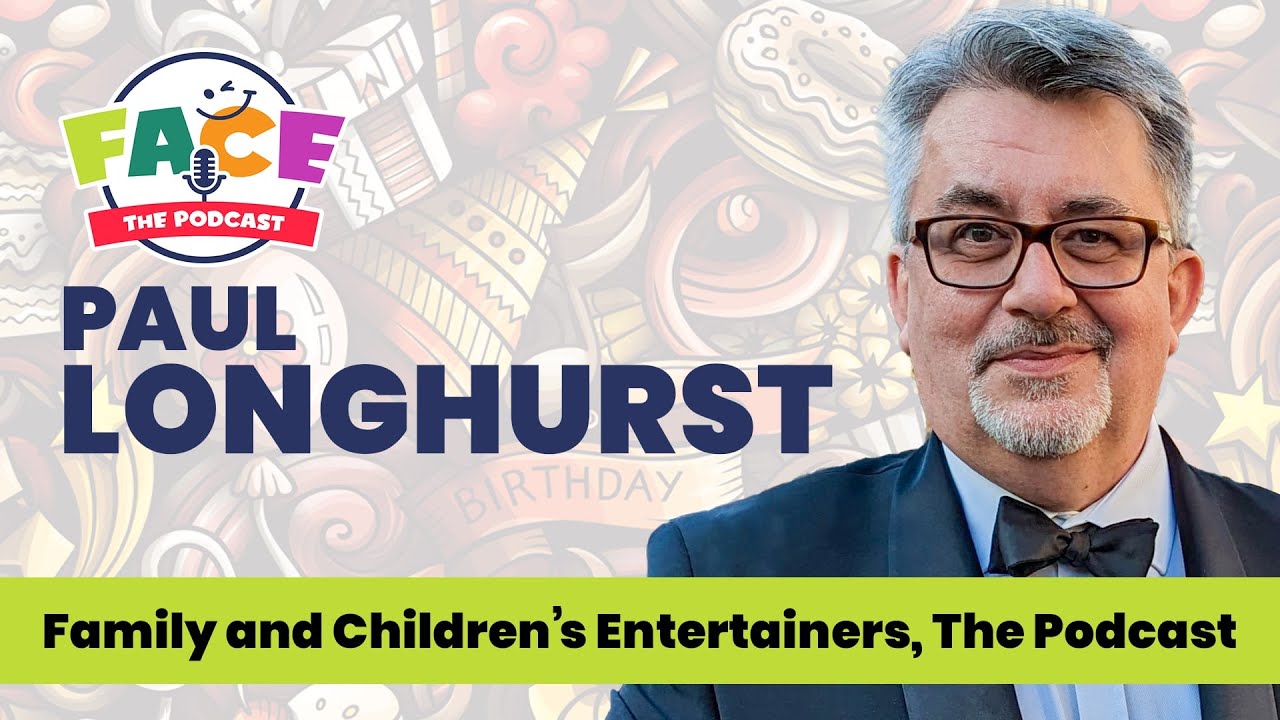
Hello and welcome to FACE: The Podcast, the vidcast and podcast for family and children's entertainers. If you've been with us before, then you'll know what to expect. Welcome back. And if you're brand new, then go and watch or listen to some of the previous episodes where we've spoken to lots of very knowledgeable and interesting people. Today's episode, we are speaking with a gentleman called Paul Longhurst. Now, Paul Longhurst, you may know from The Magic Product Review, he is also my double act partner and a very good friend of me, a very good friend of mine. And I'm very pleased that he has said yes to doing this because he's got an awful lot of information and knowledge and experience to impart to us. So we are going to be talking to Paul today. You will hear about all sorts of things, including how he decided to resign from his job so that he could go a full time professional magician. And you will also find out a little bit about why his show is different to another children's entertainers show, what makes his show different. And you'll also hear how he got fired from the Royal Shakespeare Company. All that to come. Let's get straight into this episode with meeting Paul Longhurst. So hello and welcome to FACE: The Podcast, Paul Longhurst.
[00:01:46.04] - Paul
Thank you so much. Gordon Drayson.
[00:01:48.11] - Gordon
It's really nice to have you on.
[00:01:53.22] - Paul
It's amazing to be on. Thank you for asking me.
[00:01:55.09] - Gordon
Oh, well, it's my pleasure. I should explain to the audience, Paul is a very good friend of mine and in fact we have a double act which I suspect we'll get into a little bit later.
[00:02:05.20] - Paul
Good.
[00:02:06.19] - Gordon
And every time I told him I was doing another FACE: The Podcast, his face would fall because it's not him that I'd asked. But I knew that. I knew that this was going to be a really good episode because I know your story and a lot of what it took to get to where you are now. So I know this is going to be great. And that's why I didn't want to start with it. I wanted to build up to it, if you see what I mean.
[00:02:34.08] - Paul
It's not working, Gordon.
[00:02:35.16] - Gordon
No? Okay. Trying my best here. So let's, let's start with where you are today. So tell us a little bit about your children's entertainment side and what it does, what it is and where it is now and then we'll go backwards in time afterwards.
[00:02:55.21] - Paul
Okay, fair enough. So I earn 50% income from, probably a little bit more actually, from children's entertainment, which means I do a lot more children's entertainment than I do adult entertainment. It's an, it's my joy. It's the thing I love doing. I jump out of bed to do it. I have one, basically one show at the moment, but I offer two types of parties. So the parties I offer is either kids sit down on the floor and they watch my one hour magic show or we have a two hour party, where I do fun games, prizes and competitions and things like that, they have food, and then they come and watch the one hour magic show. I tend to work quite a long way away from where I live. I tend to drive about an hour to most of my gigs. I live in Northampton and around me there's a circle about an hour away. So I go to Oxford, Cambridge, Leicester, Corby. I go down to London, Milton Keynes. So yeah, it's rare for me to work where I live.
[00:04:01.24] - Gordon
Can I just ask why that is? Why do you find that you end up having to travel long distances to your shows? Is it because the area you live in, they don't have children's parties or the money that they have there is not enough, or what? What's the reason as far as you're aware?
[00:04:20.11] - Paul
I don't know! I just don't think they've got the m... I think people treat money very differently where I live. I think that, I don't think there's as much money in the middle of Northampton as there is maybe in Cambridge or Oxford and I don't. Yeah, I, do you know what, I honestly don't know. But it is rare, very rare for me to work in Northampton. If I get an enquiry from Northampton, I'm usually too expensive, I think. But it's just... And, but, you know, so if I do one party in Peterborough, I'll be doing, you know, lots of parties, the word just kind of goes poof - spreads around Peterborough and then I'm working there for a long time. So I just haven't gone viral like that. Not viral, but you know what I mean. I haven't had that word of mouth spread in Northampton as much as I have elsewhere. But yeah, I don't know, it would be a lovely, I would love to just drive five minutes to a gig. That would be amazing.
[00:05:17.14] - Gordon
It's a dream, isn't it? Just to slightly annoy you, I had one that was about three minutes from my house on Sunday just gone. I know, it's lovely, isn't it just.
[00:05:30.01] - Paul
You can leave a prop at home and think, "Oh hang on I'll pop over and get it."
[00:05:32.05] - Gordon
I was actually considering coming home first, having something to eat and then going off to this one sort of 10 minutes before I needed to be there.
[00:05:41.19] - Paul
Yeah.
[00:05:42.16] - Gordon
So, okay, so you're travelling all around. So where you are is actually quite a good location for you because you've got the reach of all these different places that are booking you, which is great.
[00:05:55.23] - Paul
So I used to live down Surrey, which is how we first met. I moved. We were moving up north somewhere and I looked at Northampton and thought, "well, I don't know many magicians in Northampton, so that's good. And I can get here, here, here, here and here. And it's still a good corridor down to London." And I did a lot of research in, you know, the cities that were around and how it was going to work. I didn't do any research into how many other magicians lived in Northampton and it turns out there's bleeding millions of them. So I've got massive competition here. But that's great. It's good. What it means is that the magic conversation is quite big up here. But yeah, so I did have the luxury when I lived down south of having that, no travel time. But yeah, up here it's just the way it works.
[00:06:53.23] - Gordon
Okay, so you're performing children's parties, you're doing shows. Just for completeness, what else do you do? Just so that we got it on record, as it were.
[00:07:06.10] - Paul
In the magic world or the entertainment world, you mean?
[00:07:08.11] - Gordon
Yeah.
[00:07:10.08] - Paul
So, I do close up magic. I do a lot of parlour magic. I'm lucky enough to co-host The Wizard Magic Review, which is an online YouTube magic review. And as I've started co-hosting it, we're including a lot more family entertainment bits in that. What else do I do? I have a double act, with you.
[00:07:40.14] - Gordon
You do.
[00:07:43.19] - Paul
Which we'll come on to talk about later, I hope. And that's it. That's about it that's relevant. I have, I have very, very tenuous ties into the theatre industry and I spend a lot of my time working alongside a guy called Jamie Wilson and, he puts on West End shows. But yeah, it's a very tenuous and slight link there. I just go along for the fun really.
[00:08:10.19] - Gordon
So let's go back a little bit because your story is very different to my story and those that we've already spoken to on this podcast, where most of them sort of, they came through school and then just became a magician, or a children's entertainer. Now that's not the route you took, is it? How did you get into entertainment and what were you doing before that?
[00:08:37.15] - Paul
Yes, so I've always been... My character has always been an entertainer and I. So when I was very young I started playing guitar, you know for girls. And then I joined Am Dram, you know for girls. Then I started playing saxophone. That really worked.
[00:09:03.14] - Gordon
I'm getting a theme here. Every decision you make is based on one particular thing.
[00:09:09.03] - Paul
When I was a teenager... So, I was a fairly awkward and geeky kind of thing. My best friend at the time was a very good looking suave and, just you know a real hit with the ladies and I just never was, so I was always reaching for that I think. Yeah. So my teenage years were very testosterone based, and I kind of very quickly worked out that I liked being, centre of attention is wrong, but I liked entertaining; I liked lifting people up a bit. And so most of my decisions in life were around doing that. So yeah, I learned guitar. I, you know, I did the grade system and I did quite well with my grades. So, I just got grade seven guitar. I didn't do the eight. Acting, I tended to do quite well at. I just spent basically most of my time concentrating on entertaining people. I was doing some magic tricks but not really taking it seriously. It was more, it was more about entertaining than it was about the magic. I went through school, I just happened through accident to join the Royal Shakespeare Company.
[00:10:30.01] - Gordon
As you do.
[00:10:34.17] - Paul
Back in 1991 and I became. So I was a background artist for the Royal Shakespeare Company and then I got promoted up to cast just through desperation, being annoying and you know, being nice to the right people and being in the right place at the right time. So I did three seasons with the RSC at the Barbican.
[00:10:56.10] - Gordon
And we know the girls like Shakespeare, right?
[00:11:00.02] - Paul
Actually that one wasn't for the girls. I actually found my life changed from doing things for girls, to doing things for the stories. So what I have is a background collection of dinner party stories that you wouldn't believe like joining the RSC. I got sacked from the Royal Shakespeare Company. Is another great story.
[00:11:19.04] - Gordon
No!
[00:11:19.07] - Paul
Yes.
[00:11:19.21] - Gordon
Oh, we'll come to that later. I tell you what, if you would like to hear Paul's story about how he got sacked from the RSC then wait till the end and we'll put it on at the end for you.
[00:11:30.24] - Paul
It's a good... I've got... Yeah. Anyway, what else did I do? I was doing a lot of amateur dramatics at the time as well. In fact, at the time, I remember counting at the time of my O-Levels I was involved in six different productions of shows. I was absolutely obsessed with theatre and it was a great outlet for me. It was a, it was an absolute... It was an obsession. Musical Theatre as well as plays. So when I left school I decided I needed money. I was directing for amateur shows at the time. I also liked computers so I got a job in an office doing some computer work and then through sheer chance and through another after dinner story, I ended up... So just by chance I was involved in something called "disaster recovery." Back then no one had ever thought about what would happen if your computer centre blew up, or if there was a power cut, or no one had really considered the implications of a serious disaster happening. And my boss said to me "can you just concentrate on this?" And I went "yeah." And I built a plan. And then the company I worked for happened to have the first actual disaster that needed a disaster recovery invoked, in England.
[00:12:55.08] - Paul
So my plan was carried out, and it worked. And all of a sudden I was a valuable commodity within the IT world which is a real shame actually. It was a real. I know it sounds like good luck because then I was demanding more money and I got a better job elsewhere. But what that meant was I didn't follow my dream of being an entertainer. If I'd have been a failure in IT, I would have been an entertainer sooner and I would have been happier sooner. Right? But that one thing, that disaster that happened, took me down a path where I became semi successful in IT for a while, started earning money that I was enjoying, and then sort of trapped me in a life that I hated. And after a few years, in fact I was promoted up through to middle management through various companies and my boss said can I sack someone? And I just thought, "this is, I don't want to sack that person. That person doesn't deserve to be sacked." And I just. It was a big awakening for me. I had a few months off with stress, where I was just working out that my life wasn't what I needed it to be and where I needed to go.
[00:14:07.07] - Paul
A few years before this I'd bumped into James Fortune who I don't know if some of your listeners would know. James is a very larger than life character, member of The Magic Circle MIMC, does children's entertainment or I say did, he's probably retired now. I think he has retired. And I saw him at a party doing magic and I suddenly thought, "oh, I can do some magic." And I showed him some magic and I said, "what do you think?" And he was like, "oh, no, you're alright, this is quite good. You should come along to The Magic Circle." Went to The Magic Circle, met you, and my life changed.
[00:14:47.13] - Gordon
For the better, I hope.
[00:14:49.16] - Paul
Absolutely for the better.
[00:14:51.09] - Gordon
Oh, good. Because when I met you, you were working in IT. And I remember that we were driving up to The Magic Circle. There was four of us, I think there were. And you were our last stop to pick up because we sort of picked you up from work as it was on our way up to The Circle. We sort of found you at the pub, I think if I remember rightly.
[00:15:13.19] - Paul
I remember it very well.
[00:15:15.06] - Gordon
I don't think you were in there. I think you were just. I think it was a, like a local landmark that we could find you at. And then we went to The Magic Circle and at the time I didn't know you very well, but we sort of, we said, "have we got any friends in common?" Do you remember that?
[00:15:35.10] - Paul
Well, no, I know the outcome of this. Yeah, like, "let's just see who we know." How many was it?
[00:15:40.08] - Gordon
Well, we looked on Facebook to see if we had any friends in common and there was something like 273 people that knew both of us, but we didn't know each other.
[00:15:50.08] - Paul
It was crazy. And then I'd say to someone, do you know Gordon Drayson? "Well, yes!" "What do you mean yes, like that? What do you mean it's obvious?"
[00:15:59.08] - Gordon
But it's really bizarre because you weren't in my consciousness. I didn't know anything about you, I'd never heard of you. Which is so strange because it sounds like the same was true for you. You didn't... Again. And so we had all these friends in common, but we didn't realise that we had so much in common between us.
[00:16:23.07] - Paul
So the love of theatre. Absolutely. IT, and technical problem solving, and the love of entertainment, and the love of magic. I mean, it's... Yeah, it was like simpatico actually when we met.
[00:16:40.04] - Gordon
Yeah.
[00:16:40.13] - Paul
Very strange.
[00:16:41.08] - Gordon
It was very strange.
[00:16:42.01] - Paul
And one degree of separation 270 something times. Amazing.
[00:16:47.05] - Gordon
Yeah, amazing. Really is. Okay, so you were in this dead end job and so a lot of people who are in this situation, they look at the regular income they've got coming in and it's a real gamble to sort of put that to the side and take up the unknown. In this case it was, you know, going full time entertainer. So was that ever a decision that you had to really think about or was it something that you just went, "do you know what, I'm just not happy, I'm going to go and do something else and if that doesn't work I'll come back and do what I, you know, what I'm getting paid highly for." How did it work for you?
[00:17:29.10] - Paul
I can't remember. I remember thinking, because in the car there was two full time entertainers, that's you and Clive, and myself and Norman G who were, I think we classed ourselves as part time pros at the time which meant you know, we were doing the occasional gigs and you were both, Clive and yourself were both saying, "look, just it's, you know, people do it, think about it, just people do it." I knew I couldn't carry on at work. I mean that was a no brainer. I couldn't carry on doing the middle management IT job. It just wasn't going to happen. We were having, I was having conversations with my wife we had a couple of life changes had happened and we realised we would never have 2.5 kids and a Volvo, and you know that's not the life we wanted. So together Cat and I, Cat's my wife. Cat wanted to open a shop, that was her life-long dream. I just wanted to be a full time entertainer, it was my life-long dream. And we realised that actually living up north we could be, it would reduce the risk. So we could live a bit cheaper because of property prices and things like that, and just yeah reduce the risk around how we were living our lives.
[00:19:01.24] - Paul
I don't remember it being a difficult decision at the time. It was just lots of have to's: "I can't carry on doing what I'm doing. I can't, you know carry on this lifestyle here, just literally need to do it." So yeah it reminded me of a no brainer and especially seeing, joining The Magic Circle and seeing a whole bunch of people who had done it and actually looking at some of them and, obviously I'm not going to mention names, but looking at some of them and thinking "how have you done that?" Because to me what they were doing wasn't entertaining or wasn't, I could say as entertaining as what I thought I was doing. So yeah it seemed quite an obvious choice to me in the end. In fact since a lot of people have said to me, "that was brave" and that was. But actually I think the harder thing to do would be to live the life you weren't meant to live. I think the harder thing would be to carry on doing that; that drudge. I was just lucky enough to find out what I loved doing and that I was able to live from. So, yeah, I didn't see it as hard at all. I just regret not doing it sooner.
[00:20:15.15] - Gordon
Yeah. That is completely the opposite to how it normally works because you actually thought it through and calculated all the risks, which is what I would expect from someone who's into computers and IT. They would, you know, they would do a risk assessment type thing and work out what was right, what was wrong, what they had to lose. So, yeah, and most people who I've spoken to who are in that sort of situation pretty much always say, "I wish I'd done it sooner." So if there's anyone out there who is in a job that they're not enjoying and they think they can make it in entertainment, then I think, I think just be careful because it is a risk. But if it is the right risk for you, then just do it because you are going to be happier doing something you like. And you're much happier now, right?
[00:21:12.17] - Paul
I say to everyone who asked me, "I'm richer now than I've ever been." I mean, and I don't mean monetarily. You know, we have a comfortable life, but we're, we're not rich rich, but every day I love, I genuinely, I love my life right now. Yeah, it's great. It's absolutely. And the longer this lasts, you know, the better. Yeah, I don't regret it for a second.
[00:21:44.14] - Gordon
That's great. That's really good. So I've spoken previously with other people about sort of the skills that they developed before they went into children's entertainment that helped them become, you know, a successful children's entertainer. So we already know that you have music skills. I'm not sure actually if you use your music skills in your show. Well, I'll ask you that in a moment. We know you've got the amateur dramatics, which is a huge benefit to...
[00:22:14.02] - Paul
The Royal Shakespeare Company.
[00:22:15.01] - Gordon
And the Royal Shakespeare Company, yes, of course. So have you got any other sort of skills or things that you had developed before going into children's entertainment that you felt really helped you to be the performer you are?
[00:22:34.13] - Paul
So, yeah, I think everyone's journey through life prepares them for every social interaction they have going forward. So, yeah, a lot of my past. I went through a phase of having an obsession with psychology. What drives people and, you know, what makes them tick. And as I think most entertainers are interested in. I had it before I was an entertainer, professional entertainer. So, I think that's very important to know. I think it's very important to be able to look at a group of people or individuals and work out which way the crowd is going or which way that kid or that adult that you're entertaining for is going. You know, what they're getting out of it and what could help improve that. I would recommend anyone to learn about psychology of groups or of individuals. Music, I think, does, I think, an understanding of how, again, of how music affects mood or can help people. Funny enough, I don't use any music in my show at the moment. Can we talk about my show a little bit later? Because I've got, in preparation for this, I thought of a few things I wanted to say about that, but my current show doesn't have any music in it, which is strange to me, but I think there's a reason for. So your question was about other skill sets I bring. I can't think of any offhand. No. No. But I do think having a musical background helps you understand the beats of magic. Right. I do think that some magic, as you perform it, needs to have a rhythm, especially if you're going to understand offbeats. If you're going to understand how that works, I think some sense of musicality helps there.
[00:24:25.23] - Gordon
Well, there's a lot of comedians who are also extremely good musicians, you know, people like Bill Bailey and...
[00:24:34.20] - Paul
Tim Vine plays music as well, I think. And.
[00:24:36.12] - Gordon
And I think you're right. I think it helps with the timing of things, because learning the timing for delivering comedy is a really difficult thing to learn on your own. It's something you have to learn in front of an audience, really, to get their feedback. And if you have done the same sort of thing, but with music, you get a sort of an idea in your head as to how the beats should be, right?
[00:25:06.01] - Paul
Yeah, I agree. Yeah, absolutely.
[00:25:09.04] - Gordon
Never really thought about that before, but, you know, it sort of makes sense. I think a dancer is the same, actually, thinking about it, music and dancing. Because you have the timing thing, isn't it?
[00:25:21.01] - Paul
Yes. Yeah. 100%.
[00:25:23.23] - Gordon
Because we were talking to Kerry Jay recently, who was a dancer and...
[00:25:28.11] - Paul
Heard her podcast.
[00:25:29.11] - Gordon
Yeah, a perfect example there I feel.
[00:25:32.21] - Paul
The other thing I should explain, actually, I was a theatre director in Am Dram for a long time. I've directed, oh, I think probably 30 plus shows. And understanding how storytelling works and how character works, I think is... I'm very lucky that I came into entertainment understanding those. That's helped, I think, differentiate me from a lot of magicians I see. My stories, my magic is a lot more storytelling and a lot more plot driven and sometimes character based and not necessarily - I'm not necessarily the character. Sometimes my wand is the character, or my puppet, or may be that the cards or the coins or the, you know, the handkerchief is the character of the piece. I, yeah, directing has helped me a lot.
[00:26:24.18] - Gordon
So, you've mentioned your show there. So how would you say your show differentiates from, you know, someone else's show? What's your unique selling point, as it were?
[00:26:37.09] - Paul
So I don't do any magic in my show. That's probably quite a big one.
[00:26:44.11] - Gordon
A magic show with no magic? Right.
[00:26:46.15] - Paul
Well, no, it has a lot of magic. It's just I don't do any of it. I started, I love the idea in my show that at the end of it the children are all chanting the birthday child's name as the hero and I set them up with an impossible task. But basically I've spent an hour giving them the courage to stand up there and try it and then they achieve it and absolutely save the day. Become the hero. The kids are chanting their name. The mum's at the back of the hall crying her eyes out thinking, "this is just the best thing that could ever happen to my child." So my show is a, is a magical and a theatrical journey from "Happy birthday, Billy, we're going to see a magic show." To him having the courage to get back up on the stage and try and save the day with magic and then succeeding and me giving that moment to him and basically saying, "you are the best magician, you are wonderful. Happy birthday." Yeah. So my current show is that and I'm so, so proud of it. I love my show dearly. In fact I think I was saying to you recently, I've got it to a stage now where that moment is really well... Obviously I've performed it, you know, thousand plus times and it's now so well created and defined for me that I kind of want to leave it now and I want to create a new moment and a new show. So at the moment I'm thinking of something else I can do. But yeah, I don't do any magic. The children do all of the magic in my show. I love, I just love the fact that I'm there and I'm able to watch. And every show I do is different, obviously, because the child's journey through that show is different and it just makes it. What I love about my show is watching the kid turn from whatever they start their party as, into this courageous, lifted up child. It's great! And believe it or not, they, I believe, I genuinely believe, the kids know that it's theatre, know that it's pretend, but at the same time buy into it. Right. Because as soon as the party's over, they're not trying my magic words to do other magic. And then kids come back and say, "I want that thing." So my, my return is.
[00:29:33.13] - Paul
And the kids want exactly the same show because they wanted to be lifted up the same and have that moment for themselves. Yeah. So there you go. That's my kids' show. The tricks change, you know as, if I find a new trick that does that moment better or, you know, helps that kid on that journey a little bit better than, then that's fine, I'll change the trick. But for me, the show isn't about the magic tricks, it's about that journey and about the lessons the kid learns, the kids learn, on the way, you know, to creating that last five minute special bit.
[00:30:12.10] - Gordon
So it's a bit like a hero's journey with the birthday child or the special child being the hero in the party.
[00:30:21.09] - Paul
Yeah, definitely. Who'd have thought I would come up with something like that? Theatrical background has... Yeah, no, it's 100% that. It's 100% that. Yeah.
[00:30:33.11] - Gordon
That's a really good basis for a show, I think, because you can't go wrong. You know, the birthday child is the hero. Which, you know, in other shows, my show, for example, the birthday child gets to make the bunny rabbit appear. And you know, that's the big moment for the birthday child. But that's only a small part of the show. It's the bit they remember, but it's only a small part. Whereas your show is all encompassing. It's the whole. The whole party is all about their journey and them being the hero.
[00:31:05.00] - Paul
Every effect links to the next effect and they each have a reason for being there in terms of helping that child just have. It's literally about the confidence. Now some kids are confident to stand in front of other kids and show off, right? So for them it's not about giving them the courage to do it, it's about bringing them down into the right. So they're not showing off for themselves. What they're doing is they're helping. They're a... Because at the end of my show, I have a big problem. I've painted myself into a big, big corner, and, you know, end up looking really, really silly if X, Y and Z goes wrong. And they help me. So for the confident kids, it's about that. It's about. It's something else. But, yeah, it's the... What I'm trying to say is every effect has a, has this a reason for being there. It's very difficult for me to go, "oh, that didn't go down well. I'll try a sucker trick. Let's get out the dye box." Right. Which is, but in most shows I see whether other children's entertainers do that, they have the ability to just go, "right, let's do this trick now." Yeah? But in my show, it has to fit that journey.
[00:32:20.11] - Gordon
So you're empowering the kids during the show, effectively.
[00:32:25.14] - Paul
I'm training. Training's the wrong word. Yeah. Absolutely.
[00:32:31.19] - Gordon
We'll be right back with the podcast after a word from our sponsor, which is me, Drayson Design. We specialise in creating websites and graphic design, but today I want to talk to you about domain names and, more specifically, the right domain name for your business to make sure you are found when people search for you. You can see from the stats there were 359 million domains registered up to September 2019. Our domain name searching tool allows you to type in keywords and it will then search all the most popular extensions like .com and .co.uk to see what's available. Children's Entertainer has already gone, as you might expect, so let's try something different. For example, Surrey Magician. And there we can see. SurreyMagician.com is available at the time of recording, which could be a great domain name for you if you were a magician in Surrey. Once you've found your perfect domain name, then you can purchase it directly through our website and start using it for email and for your website. If you have any questions, please get in contact and we will help however we can. This free tool is available on our website, www.draysondesign.com - that's D-R-A-Y-S-O-N design.com.
[00:34:00.01] - Gordon
Right, let's get back to the podcast. You obviously didn't start with this show because it's taken a long time to get to this point. So did you do a show where you had one trick after another trick that didn't necessarily link and it was just a show? And if so, have you seen a huge difference to the point that you would never go back to that with the show you've got now?
[00:34:26.20] - Paul
Yeah. So I started as you know, by stealing your show. That's not strictly true. So for, for the listeners and watchers, I was a close up magician when I, when I met Gordon, and Gordon basically said, "Oh, you know, you should have a look at kids' magic. It's great." And I, as an outsider to magic coming into the world, I wanted the world to look at, the magic world to look at me as a, as a very skilled and "look at Paul, and his close up magic and isn't he the..." I wanted that line of respect when I went to the world. And what I soon realised was, through you and Clive and many others, and James Fortune, that kids' magic is actually completely separate and what a lot, in a lot of ways, much harder skill set. In a lot, other ways it can be easier. If you don't take it seriously you could be a kids' magician with no skill and kind of get away with it I think. But to have respect about what you do, which is what I love about the children's magic world is there's an unpretentiousness about the skill sets that we, that you guys and I now have, is lovely.
[00:35:53.06] - Paul
So, what you showed me was it was skilled and it's so much fun. So you helped me create my first show. Well, you've advised me on things to buy and, I watched your performances and I bought some books and DVDs and things like that. But you very much mentored me through my first show. So you know very well, that I didn't nick some of yours but I certainly was inspired by a lot of what you do.
[00:36:21.23] - Gordon
It was quite funny actually when I did come and see your show once and I was thinking, "oh, I recognise that line, that's really funny. Oh wait, hang on, I know where it came from now." But that's fine. I mean I think that's how we, you know, standing on the shoulders of giants and so on. I think all children's entertainers, you know, if someone has...
[00:36:41.03] - Paul
I love you dearly but you're not a giant.
[00:36:43.22] - Gordon
That's a bit rude. I'm right here. I'm the same height as you on the screen.
[00:36:48.23] - Paul
Yeah.
[00:36:49.18] - Gordon
So yeah, I think you know, all children's entertainers, if they see potential in another entertainer and they think that it's not going to impact on their business because they're not sort of down the road. They're all very, very willing, in my experience, to help other children's entertainers.
[00:37:07.19] - Paul
In that respect, it's a much kinder and less pretentious atmosphere or world than any other form of entertainment that I've known. It's rare that you find actors helping each other in the same respect as magicians or entertainers or, you know, children's performers do. I find it a very... It's a really great community. All of the conventions I go to are just, I love them. It's fabulous. Yeah, it's great. It's great. And you're, you know, you're a shining example of that. And there are many others, like Craig Petty, for instance, shares his. He shares his magic so much and he's achieved so much. And when you look at him, he doesn't have to do that. You don't have to do what you do. I think it's fantastic. I think it's absolutely wonderful.
[00:38:03.24] - Gordon
Oh, well, thank you for those kind words.
[00:38:07.15] - Paul
I mean it.
[00:38:07.24] - Gordon
So back to the question. Did you do a show that was just one trick after another and then led to these? And how has it changed? How did you... How do you feel the change between the two has become? Is it to the point where you don't think you could ever go back to just doing a show of a collection of tricks?
[00:38:29.05] - Paul
Sorry, I'd forgotten you asked that question. Yeah, I care more. Personally, I care more when that, when that journey, when that whole. When the show has a whole theme or a whole, you know, something that I can, I can follow a plot through. It's just about me caring. I don't know if the kids care so much. I don't think I could get to the stage where the kids are chanting, you know, the birthday child's name, the mum's at the back crying, and I have a kid who is nervous about doing what they're about to do, but still they do it. They kind of, they take that final leap. I don't know if I could get to that stage as often if it was just a trick, after a trick, after a trick. But does that matter to me as much? I don't know if... I don't know. I'll be honest, I'm parking my current show now because, as I said, I've performed it enough now. It's as good as I think it's going to be. I will always have it. It's... It'll be in the car, and I can get it out for one in every five shows or something like that now. What I want to do is start again and see what's going to happen. So I think I might start going back to doing a trick, by trick, by trick show and see what is. Because I didn't create, I didn't deliberately sit down and say, "I want this happening." It's what I love about my show now. But that happened over time, you know, it grew, it was, it created itself. So I think what I want to do is start afresh, get rid of that final picture and now see what grows and do it again. So I'm going to go back to a trick, by trick, by trick show, I think, and see what grows this time.
[00:40:22.08] - Gordon
So the way that you work and the way I work is very different. And we discovered this very early on. I'm very much a planning sort of person. I will plan as much as I possibly can, even if that plan never gets played out. Whereas you're much more a suck it and see and just "let's get on with it and it's going to be great" type person. And because we found that out quite early on, you were my first choice to come to when I found that I had entered myself into the Kidology competition and I had to then put an act together because I said yes before I had an act and I thought, "who do I want to speak to about this?" And you were my first choice because of your background in theatre and the fact that I wanted it to be a theatrical experience and not just a few tricks on a stage. There was no one else in my mind to come to. And...
[00:41:28.15] - Paul
That's kind, thank you.
[00:41:29.17] - Gordon
I came to you to ask, you know, your advice and you basically just came on board. You sort of, you didn't just answer a few questions, you said, "right, let's sit down, let's talk about it, let's do it." And together we created that act which ended up winning the Kidology competition and then after that, the British National Children's Entertainer Competition at Blackpool. And that's because of the way that you think and the way I think and the way that we came together. And so I'm really grateful to you for, you know, giving me your time and helping me to create the, the winning act.
[00:42:14.05] - Paul
I was hungry for that. I hadn't directed anything for a while. I'd been doing magic, magic, magic, magic, magic. And for someone who I admired with a skill set that I love, to come to me and go, you know, "can we do something theatrical?" I literally, I was like, "Yes! Yes! I miss it! I want it!" And the other good thing about you is you took it seriously. You're a hard worker and I think everyone loves to work with someone who, who wants, who they're going to learn from. Right? So, yeah, we've got very different approaches and I think that helps us collaboratively. So I know that you're going to take it as seriously as I'm going to take it. You're going to put more. Well, I'm going to put a lot of energy into it. And you actually ended up putting your life into it. It was amazing. So you put a lot of energy into it. And I learned from the process as well, so of course I was going to do it. And I loved doing it. That was a great thing to achieve. Really good.
[00:43:17.05] - Gordon
And so, because we were successful with Kidology, and then after that, the Blackpool competition as well, we thought, "well, do you know what? We work together well, don't we?" And so we thought we'd take that a bit further. So do you want to. Do you want to sort of take it from there? This is definitely in the realm of family and children's entertainers, what we're about to talk about, because that was our, that was our sole aim, wasn't it, at the time? So do you want to take it from there and just sort of give us your side of this story?
[00:43:48.13] - Paul
So we were in the car, you said to me, "Paul, I'm thinking of creating a double act. And, you know, would you be interested?" And I remember thinking, so I should explain to watchers and listeners, my memory. I don't remember details of anything. I remember feelings, emotions and connections. I just can't remember who I was with at the time or what colour shirt people were wearing. It just doesn't. It's not in my psyche. So I remember you asking, I remember me thinking where I was thinking the same thing about you. So I remember thinking that that was like, "wow, that, that would be brilliant. Let's do it." And then you, as you do, came up with the brilliant suggestion of, let's make a podcast of the, of the journey. And I just thought that was, and still do, I just think that was brilliant. So what, what we created not only was a double act that, you know, I'm proud of being a part of and we'll come to that beginning in a minute, but also the podcast that I'm really proud of, of two people coming together and saying, "right, we want to entertain people, how are we going to do it? What are we going to call ourselves? Who are we going to entertain?" You know, what's it going to. Literally all of those decisions, from start through to us headlining at The Magic Circle, you know, touring the show, the different iterations. So if anyone's interested in learning how we undertook that journey, and I think there's a lot of very valuable lessons in there to learn personally, then check out Pip and Paul podcast. What was it called in the end?
[00:45:51.10] - Gordon
Well, pipandpaul.com is our website and they're all on there, but if you do a search for 'Pip and Paul Show,' I think it is on any of the socials, like YouTube and on your favourite podcast platform, then you'll be able to listen to us as well. Because I did a similar thing that I'm doing with FACE: The Podcast, where we created a video and an audio version of the podcast to make it easy for anyone to listen to or watch. You know, if you're watching it, you do get a few other bits that you don't understand or you don't get if you're just listening to it. So if you're able to watch it, that's the best way to do it, but listen to it as well. And it is, it's a journal, if you like, of all the decisions we made to create our double act and how we came to those decisions.
[00:46:49.14] - Paul
What I love about it, and I'm most proud about it, is it's transparent. So mistakes are on there as much as... You know, we didn't do it to look good and we didn't do it as an advert for us. It was intended to be, and the thing I'm most proud of, it's an actual vlog of our real journey into doing that, which is what I think, what makes it valuable.
[00:47:17.10] - Gordon
Yeah. So I will put a link in the show notes, but pipandpaul.com have a look at that. You will be able to see everything you need to from there. So, yeah, take us, take us through from that. So we, we created a double act and I should say Paul is slightly more than half of our Pip and Paul show. One of our jokes. It's one of our jokes. Just because he's taller than me.
[00:47:44.18] - Paul
It's one of my favourite jokes actually.
[00:47:44.24] - Gordon
That's what it is. It's you're taller than me, isn't it, Paul?
[00:47:48.12] - Paul
It's definitely that.
[00:47:52.08] - Gordon
We've had a lot of fun with The Pip and Paul Show, actually.
[00:47:54.23] - Paul
So one of the, one of the problems of me moving up north was my life has, and my wife opening a shop, was my life fundamentally changed its routine, as you'd expect. I suddenly had to start creating a business and a life up here. My wife was running the shop and she needed more and more help because you can't... It's a big shop and you can't do that on your own. And so I found the excuses to not participate in. That's the wrong way of putting it. I found that I was unable to give Pip and Paul the focus it needed. And I apologise, genuinely apologise to you, Gordon, that I haven't been able to do that. And I really, really want to get it off its feet again. And I think actually the time is very right. I think. So, 2025 will be Pip and Paul resurgence year. I hope actually that we're not only going to be doing shows. What I'd like to do is also, I've got some product ideas that I think we should look at releasing. I haven't told Gordon about any of this. And I think we should do a lecture tour.
[00:49:09.23] - Gordon
Oh, I like the idea of that, double act creation lecture tour. Yeah. We actually did get asked to do something at The Magic Circle, which sort of was a little bit about doing double acts, which was really good. And that was only a short thing, but that I think was very well received. We should actually say what Pip and Paul is. So Pip and Paul is a family show. It was designed for families and our target audience was people who are at Holiday Parks or theatre shows. So we went from Holiday Parks where you do a 45 minute show. That's how we started. We did six half hour TV shows in Europe, which was lovely, really nice to do. And we then decided that we'd like to do a full evening show. So we put together our 45 minute show sort of, and then just spoke really slowly, basically. No, I'm kidding, I'm kidding. What we actually did is we expanded on our characters and in fact our characters changed and if you watch our journal, you'll see how they changed and why they changed. And we've, we've expanded the characters to give us a full two hour show with an interval so that we could tour around smaller theatres. And that's where we were before sort of Covid hit and everything sort of changed. But we, we've got, you know, we've always had plans to bring it back, and bigger and better really.
[00:50:51.13] - Paul
Yeah. And the problem is they've always been planned so yeah, no, I'm really strong on Pip and Paul in 2025, so hopefully, if Gordon's keen, then. Yeah. Watch this space.
[00:51:07.17] - Gordon
We should actually mention one of the effects that we wanted to do in The Pip and Paul Show that neither of us had the skills for. And we decided we'd go out and get those skills or see if we had those skills, because I feel as a children's entertainer and a family entertainer, they are really, really helpful for what we do. Would you agree?
[00:51:32.24] - Paul
100%.
[00:51:34.02] - Gordon
Okay. So do you want to tell everyone what the premise of the trick was and the skills that we needed and how we went about it?
[00:51:42.08] - Paul
So we loved the idea of creating a moment that no other audience had seen. So you know that moment in the theatre when someone corpses and you think, "oh, that's just. That's. I saw him actually laughing."
[00:52:01.15] - Gordon
"I was there on the night that happened."
[00:52:04.01] - Paul
"I was there on the night that..." Because what that does is that creates a lovely story for people to go home and tell. Right? A little bit of chaos, a little bit of. Yeah, that. "That only happened for me." And of course, if you take that to an extreme, that's improv, right? So the extreme of "I saw the production, I saw the night where..." Is when you shouted out the idea and that became the show. So we decided to put some improv magic into the show. And we, neither of us really. I think we were both good at improv in our own worlds, right? So if a heckler says something or if you're doing some close-up and someone makes a joke and you react to that joke. So, I think we were both quite reactionary comedians at the time, within our own characters. But could we do that for a scene for a magic trick or for a, yeah, for a, for any sort of segment? So we both went to improv classes together. And again, one of the best things I've ever done. Brilliant. In fact, every aspect of my performance life has changed since doing that I think. My close-up has got better. My kids' shows 100% got better. And Pip and Paul, we started a scene with suggestions from the audience. We acted it out, and at some point we had to solve a puzzle or a problem with a magic trick. And neither of us knew what magic trick that was going to be until that moment happened.
[00:53:41.23] - Gordon
And I think that was the first time that we had ever seen anyone do that. And that's one of the things that we thought would make Pip and Paul different to other double acts, because there are a lot around. And we both felt that...
[00:53:58.11] - Paul
I think we invented it.
[00:53:59.23] - Gordon
Yeah, well, I'm not gonna claim that we invented it because I don't have the facts to back it up. But I'm pretty sure I hadn't seen it before.
[00:54:07.07] - Paul
Tell you what, if we didn't invent it, put it in the comments or send us a message, otherwise I think we did.
[00:54:13.02] - Gordon
Yeah. As a double act. Double act improvising a scene with a magic trick in it. So, yeah, we were doing this eight years ago. In fact, my Facebook feed showed that we did one of our first big shows yesterday 8 years ago at The Archway Theatre, which funnily enough is where we were learning our improv skills. So we should give them a shout out. In fact, Dingbats Improv, they're still going very strong. In fact, they've got two venues now that they teach at. And so if you're looking to do improv and you're in the Horley/Crawley area, look them up. I'll put links in the show notes again. But they are great. Ed is the leader and he's so good.
[00:55:02.11] - Paul
He's fabulous. He's fabulous. I actually came up, when I came up to Northampton, I started taking some improv classes and I couldn't find anyone as close to Ed from Dingbats and it for me...
[00:55:20.16] - Gordon
So thank you, Ed, if you ever listen to this. Thank you for your tutelage on improv. It's been a while actually since I've done improv and I need to. I say it's been a while. It's been a while since I've been to an improv class. I do improv in my shows still, but not to the extent that going to a class gives you the skills. And I think, in fact it's, it's something that all entertainers can learn from and should have in their back pocket.
[00:55:51.04] - Paul
100%. It's, I think what it helps with is, I think magicians especially, but I think a lot of entertainers get into a phase of performing at people and what improv allows you to do is include an audience. Even minor improv skills, I think help you work alongside an audience to give them, to let them be part of what you're doing a lot better. Does that make sense?
[00:56:21.23] - Gordon
Yeah. And it can, it can not just be, you know, on stage, it can be close up magic as well. You know, you can use improv skills to just take a trick that you've done forever in a slightly different direction just because of something that someone says or the way that it's happening.
[00:56:40.09] - Paul
And thinking of other family entertainers. So even princess parties. So if you were a character at a party and you've taken improv classes, can you imagine the journeys and the fun that the children could help create? And it doesn't have to be as big as that. It can just be taking something they do and having the skill set and the courage and the experience to expand that even a touch would make that kid feel just wonderful, right? So, you know, face painting, if a kid sits down and says something, just work with it. You could create something better and individual for them. I think every family and children's entertainer could learn or could grow a bit from doing improv.
[00:57:29.08] - Gordon
Yeah, I totally agree. And it's, it is difficult to do, but it is a skill that you can learn and the more you do it, the better you get at it. Just like magic, I guess.
[00:57:42.05] - Paul
Or any other entertainment skill. Yeah.
[00:57:45.03] - Gordon
Yeah, of course. So we have spoken about how you started, we've spoken about how your show is now. Let's just spend a few minutes looking towards the future. We've already said that Pip and Paul is going to be something that we're going to get back to doing...
[00:58:02.15] - Paul
2025.
[00:58:03.02] - Gordon
2025, which is just as well because we've got an illusion sitting in my garage that we bought that's not been used yet. So that would be nice.
[00:58:14.19] - Paul
I literally have nightmares about that illusion. Not as many as I'm sure you do.
[00:58:16.10] - Gordon
Let's look at the future of Magic Paul and your children and family entertainers. I mean you've got to quite a, quite a well known place where you are. So you're known, you know, an hour away from you in all directions as a, as a Magic Paul. Quite well known for that. What else is there for you to conquer? What do you want to do?
[00:58:46.01] - Paul
I'll be honest. So I'm 55 now, right. I want to do children's shows for as long as possible without turning into that old man who's doing children's shows. So I, for me.
[00:59:02.12] - Gordon
Can I just stop you there for a sec? So, I know exactly what you mean, but I've seen some very old doddery magicians - in my head Billy McCombs springs to mind. I saw him perform and he was the funniest performer I'd seen for a long, long time and he was great. So I think being old and being a magician, especially a children's entertainer, is not a bad thing. It's just when you start losing your edge and you're not so good as you could be that I feel that I would want to stop.
[00:59:36.06] - Paul
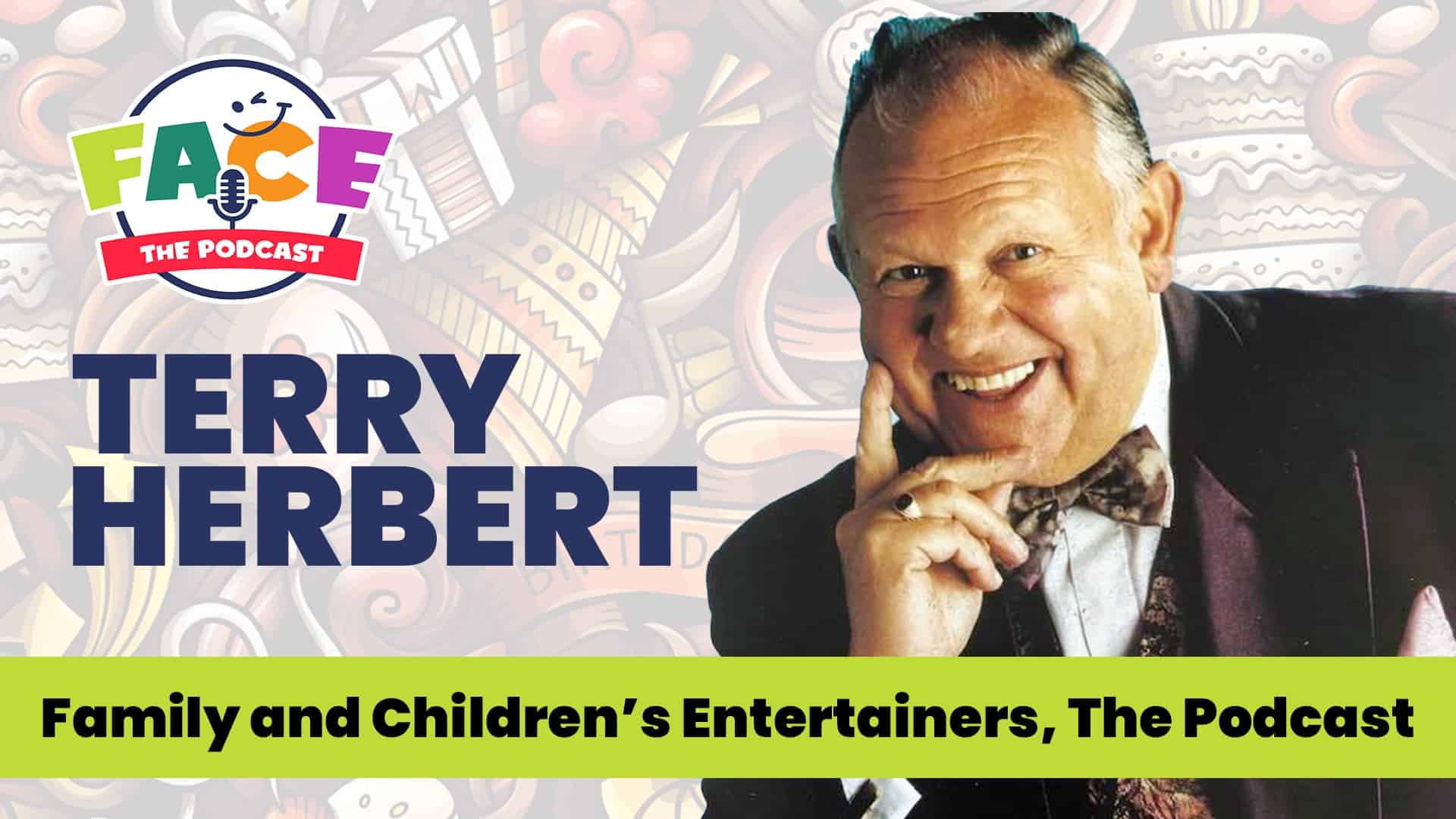
I mean, I saw Terry Herbert performing recently and it was, oh my God, it was, it was a lesson. It was wonderful. Of course it was, because he's Terry Herbert. So, no, I do understand what you mean. And I think what you need to do, though, is just keep it fresh, make sure you're doing it for the love of it instead of just because it's a job. And I think that's true for any entertainment art form. The minute you start repeating things rather than creating things in the moment, is the moment it's died. I'll never forget I saw a magician do a coin routine, a one coin routine for me in public without knowing who I was or what, you know, and I could see in his eyes he was going through a shopping list or he'd just turned off. But his patter was funny, or at least it probably would have been if... He just wasn't engaged. He wasn't having, he just wasn't having fun with it or creating it in the moment. So for me, you're asking me what it's about. For me, the future is about finding out how I can keep doing that. I was, funny enough, I was saying about my show is as good as I think it's going to get for the moment. I'm beginning to feel that I'm going to start. I have not yet, but I'm going to start just repeating it. And I don't want to be that guy. I want to be creating things. Because that's what keeps me alive; I think that's what keeps the show alive; and I think that's what keeps the audience alive as well. So what's my future look like? I don't know, but it's going to be something that I'm going to be continually making happen and something I'm excited about. And yeah, you know, as I said, I'm going to start from scratch and we'll see what grows.
[01:01:31.02] - Gordon
So one thing we haven't touched on is how your IT background has sort of overlapped with your entertainment that you do now. So do you want to just briefly mention or, you know, as much detail as you like, really, how those two have overlapped? Because you've got certain skills that you have from the IT world and how have you used those within your business?
[01:02:00.09] - Paul
Oh, so my booking systems I've created myself - based on an idea from you, again, actually - is very in depth and does a lot of fantastic work for me. People can't double book me. It works out travel time between things and... So, my booking system knows where I need to be at what time and works all of that out. My automated emails I send before every event. So before my events every child gets a video of the booking, which is personalised to them. They get a party pack full of games that are personalised to them. There's word searches personalised to them, mazes, colouring in, games. Depending on age ranges, there's different things again or with their names, their parents names, their loves, their hobbies all included. This is all automated. On the morning of the party, there's getting in the car, coming to see them. So my magic shows and that journey I was telling you about starts at the booking, which I think is important. When... I mean, in Pip and Paul, we, when we were creating the show, we believe it or not, and people who know us will believe it, had spreadsheets for every minute of every show and how we thought that show would flow. So in terms of comedy, pace, drama, magical effects, and we literally had the whole show plotted out so we could watch and judge how that would go. And that was a, to us, that was a technical solution. I think it's, you know, if. But technical is the way I speak, it's the way I work, it's the way I think. My wife would pick up a pen and paper and do the same things. For me, [inaudible 01:04:07] the solutions, technically, it's just the way my brain works. Is that the sort of thing you were alluding to?
[01:04:13.12] - Gordon
Oh, yeah, definitely. And in fact, we both added digital invites to our systems now as well, which is for me, going really well.
[01:04:25.01] - Paul
Yeah, me too. Me too. It's important, I think, especially everyone now just does everything on their phone and expects everything done on their phone. So to give your customer a "push this button and it's done" solution, it just really helps. It helps create the story at the end that we did everything we could to make their party as good as it possibly could be. And I do, I want every party I do to be the best it can possibly be. So, yeah, I'm always looking and thinking about how I can ease that journey for that customer. I think actually, with what you do with your photos and things like that, I think you do it slightly better. But I'll let you explain that on your own interview.
[01:05:11.18] - Gordon
On my own. Yes. I'm looking forward to interviewing myself. That'd be cool. So quick fire round to finish. Unless there's something else you wanted to discuss. Do you want to discuss anything else?
[01:05:24.02] - Paul
No, I didn't, no, I'm just pleased to be here.
[01:05:27.08] - Gordon
We're very pleased to have you here. I'm sure that there's lots of people who've listened to this and they've got something from it because...
[01:05:35.14] - Paul
I hope so. And well, if you, if you've got any questions, get in contact. I'm an open book.
[01:05:39.21] - Gordon
Okay. Yeah, we'll make sure there's contact details in the show notes and we'll put some at the end of this, this recording. And don't forget, if you want to hear the Royal Shakespeare Company story that's coming up very shortly. So quick fire round. Are you ready for this?
[01:05:57.03] - Paul
I'm ready.
[01:05:57.23] - Gordon
All right. Favourite effect?
[01:06:03.12] - Paul
Silver Sceptre.
[01:06:04.23] - Gordon
Silver Sceptre. Okay. Proudest moment in magic?
[01:06:09.22] - Paul
Oh, proudest moment in magic. You winning the National Children's Entertainer of the Year.
[01:06:17.07] - Gordon
Because we, we did it as a team. Yeah. Thank you.
[01:06:19.24] - Paul
Yeah. Oh, yeah, it was incredible. It was a wonderful moment.
[01:06:24.05] - Gordon
Android or iPhone? This isn't very quick fired, Paul. Come on.
[01:06:33.01] - Paul
I'm an Android boy. Android.
[01:06:35.05] - Gordon
Android. Okay. Let's see.
[01:06:38.02] - Paul
Can't believe you did that.
[01:06:38.17] - Gordon
Anything in magic that you haven't done yet that you want to do?
[01:06:48.13] - Paul
I, yeah, I want to get more skills. I want to up my skill. At the moment I err for dramatically good and easier to perform and what I want to do is up my skill set. Yeah.
[01:07:02.24] - Gordon
Favourite non-magician performer?
[01:07:06.06] - Paul
Wow.
[01:07:10.05] - Gordon
It's a tricky one, isn't it?
[01:07:11.11] - Paul
I can't answer that. I don't know. I don't know. I'll come back to it. I'll come back. I literally, I will come back to that.
[01:07:15.21] - Gordon
Okay. Favourite magician? Or entertainer, Children's entertainer.
[01:07:23.23] - Paul
Favourite magician or children's entertainer. I would always watch at the drop of a hat. Oh man, I should have thought, you know what I should have thought about any of these. I have about 10 in my mind.
[01:07:38.06] - Gordon
Just reel them off. Reel them off.
[01:07:41.14] - Paul
So I loved Terry Herbert. Any... Right, I'm going to say Terry Herbert. When Terry Herbert starts performing, I turn into a five year old child and all worries in the world go. There you go.
[01:07:55.17] - Gordon
Very good. Okay, last question. Favourite podcast to listen to?
[01:08:02.17] - Paul
I love "The Rest is Entertainment" at the moment. I'm pretty obsessed with it and I wish it was on every day. They have chemistry, interesting stories and, yeah.
[01:08:12.05] - Gordon
What, sorry, what was that one?
[01:08:14.00] - Paul
The Rest is Entertainment.
[01:08:15.21] - Gordon
Okay, and that's your favourite podcast, is it?
[01:08:19.17] - Paul
Yeah, I, I'm literally when it finishes I'm a little bit. So it's. What?
[01:08:28.17] - Gordon
Unbelievable.
[01:08:31.15] - Paul
Well, obviously Pip and Paul.
[01:08:32.02] - Gordon
Second favourite podcast? We'll keep going till we get here.
[01:08:37.20] - Paul
Get to FACE.
[01:08:40.18] - Gordon
Cool.
[01:08:41.15] - Paul
I'm really glad that you're doing another season of FACE, because I think it's important and, yeah, I think it's a really important podcast to do. So I'm really chuffed you're doing a second season.
[01:08:57.08] - Gordon
Well, I'm really pleased that you said yes when I asked you, so thank you very much for doing that. Before we finish, would you like to give us your Royal Shakespeare Company story?
[01:09:08.14] - Paul
I'm gonna make it as quick as I can. I was doing a backstage tour of the Royal Shakespeare. We'd just been to see Taming of the Shrew with Josie Lawrence in it. Doing a backstage tour. The tour guide said, "I don't usually do this. I'm. I look after the extras." "Oh, how'd you become an extra?" He said, "oh, someone's just dropped out. You interested?" And I went "Yep!" I was on a trip with a school at the time and I said to the school trip, "I'm gonna stay here and I'm gonna be in the next performance." And she said, "well, no, we're not allowed to do that." So I rang my parents and said, "is it all right if I stay here and I'm in the next performance?" And they went, "yes!" So I got them to sign off to the teacher. Five hours later, I'm at the side of the stage at the Barbican on my - this is absolutely true - in a crocodile of people. And I turned to the person next to me and went, "it's my first time. What are we doing?" And he said, "oh, we just go on stage and you're happy." And I went, "oh, okay." So I, the doors opened, we all walked on stage and I was happy on the Barbican stage in a production of Julius Caesar in 1991. About two minutes later, he came up to me, went, "watch me. We're going to be sad in a minute." And I got through the first performance like that. Then I started working out that some of the extras had more to do. So they would put on; there was a table at the side. You could go up to the table and say, "can I have a broken ear and a smashed nose, please?" Or "can I have a split lip and an axe in my head?" And they would just slop it on and you'd go on for the battle scene. So I started doing that. And then there was a guy who had to run on with a line and I said, "can I do your line tonight?" And he was, "yeah, I don't mind." So I went on and did his line and I just could have. I just was making myself a little bit more known and a little bit. I was, I wasn't as controlled as I am now.
[01:11:16.02] - Paul
Eventually one of the minor cast, because we were separate from cast, got ill and I said to the, so the, not, they don't have like a director who's there every day; there's a company manager. I said to the company manager, "I'll do. Oh, you know, I can do this." And they literally thought, well, they could recast and they could go through that, or it was just one line. So I progressed up to the, to the cast. Then you all had a line to say at the same time. And when I wasn't playing that part, the cast part, my dad and my girlfriend were in and we all had to say at the same time, "The will, the will. We will see Caesar's will." And I was really upset they were watching it on a night that I didn't have my own line. So I just thought if I say "the will" a bit after everyone else instead of at the same time, then my dad and my girlfriend will see me. And it just so happened that the actual director was in that night and said, someone come up to me and said, "the director noticed you last night."
[01:12:25.17] - Paul
And I went, "oh, oh, this is it. I'm a star." He said, "make sure he never notices you again." That wasn't meant to happen. And then I was pushing for another line and the original guy who said he was in charge of the extras came up to me and said, "look, it's, you shouldn't. This is..." So I was sacked.
[01:12:47.18] - Gordon
Right. Your brief London theatre career came to an end at that point.
[01:12:56.10] - Paul
Oh, no, that's not my London theatre career. Oh, no.
[01:12:59.08] - Gordon
Oh.
[01:13:00.00] - Paul
I came up with the idea for a full West End musical that was performed.
[01:13:03.21] - Gordon
Did you really? Was I there at the time, by any chance?
[01:13:06.20] - Paul
You were there that night that we went to see the improv musical and it was my idea that...
[01:13:11.08] - Gordon
Showstoppers. Yes, it was. And ever since he's been saying that his idea for musical idea took off in London. Just the one night, however. Well, do you know what, Paul, it's been a pleasure to speak to you. Thank you so much.
[01:13:29.20] - Paul
Spending time with you is wonderful Gordon, thank you.
[01:13:33.00] - Gordon
Awww. I'm sure that everyone has enjoyed this. How do they get in touch with you if they wish to do so.
[01:13:41.04] - Paul
So, I'm not on Facebook very often, but I look at Facebook Messenger quite often. Email paul@paullonghurst.com. The Wizard Magic Review, you can see me on there. Watch out for Pip and Paul. I love this community and I think I, with my theatrical background, I stand out. Stand out is the wrong word. I think a little bit differently to most of the people here and I love being able to help and share wherever I can. So if you've got anything that you want to chat to me about, please do, because it, genuinely I love it. You know, I have a great time and I want to give back as much as possible. So there you go.
[01:14:20.19] - Gordon
Thank you so much, Paul. That was Paul Longhurst talking to us on FACE: The Podcast and thank you so much for being with us.
[01:14:29.12] - Paul
Are you kidding? Thank you.
[01:14:32.04] - Gordon
So there you have it. Paul Longhurst. A fascinating man, someone who's really worked hard in making his show what it is today. I loved hearing about his experience as a director. We didn't really get into that much, but he's definitely put on some very memorable shows, for all the right reasons. He's very well known as a director in the area that I live in, where Paul used to live and he's very well respected. So thank you for that, Paul. I also loved hearing about how his show has got this story arc to it. I like the idea of making it a theatrical experience, even for a birthday party. And making the birthday child the hero of the party, not just the person who does magic, but somebody who sort of overcomes something to become the hero is just great. I love that idea. It was also very interesting to hear his story about how he got thrown out of the Royal Shakespeare Company. And yeah, we spoke about Pip and Paul as well. This is going to be something that we are going to be working on again in 2025, so look out for for us coming near you soon. Whether that be our lecture or our show. We'd love to see you at one of our Pip and Paul shows. Do come and say hello. Well, that's it for this episode. As always, you can find all the episodes that we have had in the past on the website, which is facethepodcast.com. We are also on all of the big podcast platforms so you can listen to us with your favourite podcast application. And by doing it that way you'll also get all the new episodes appearing on your device for you without having to come to the website. Although, as I said earlier, I think it's a better experience to see it sometimes; you get to see the emotions of people, but not everyone can do that. Can't do that if you're driving, for example. We'll be back with you with another episode very soon. I realise we had quite a long gap between the previous episodes, but we're back. We have got lots of wonderful guests that we've got coming up for you and of course we've also got our round tables that we are going to make sure are very interesting for you, where we bring people who've been interviewed in the past together and we talk about things that are affecting children's entertainers and family entertainers at the moment. Don't forget, you can also join our Facebook group. I'll put a link in the show notes. There's also a link on the website and we try and get some sort of discussions going on there as well. So thank you very much for joining us. My name is Gordon Drayson. I've been your host for FACE: The Podcast, and I'll see you next time. Goodbye.